

by Richard Uhlhorn
Boat Inspection Program:
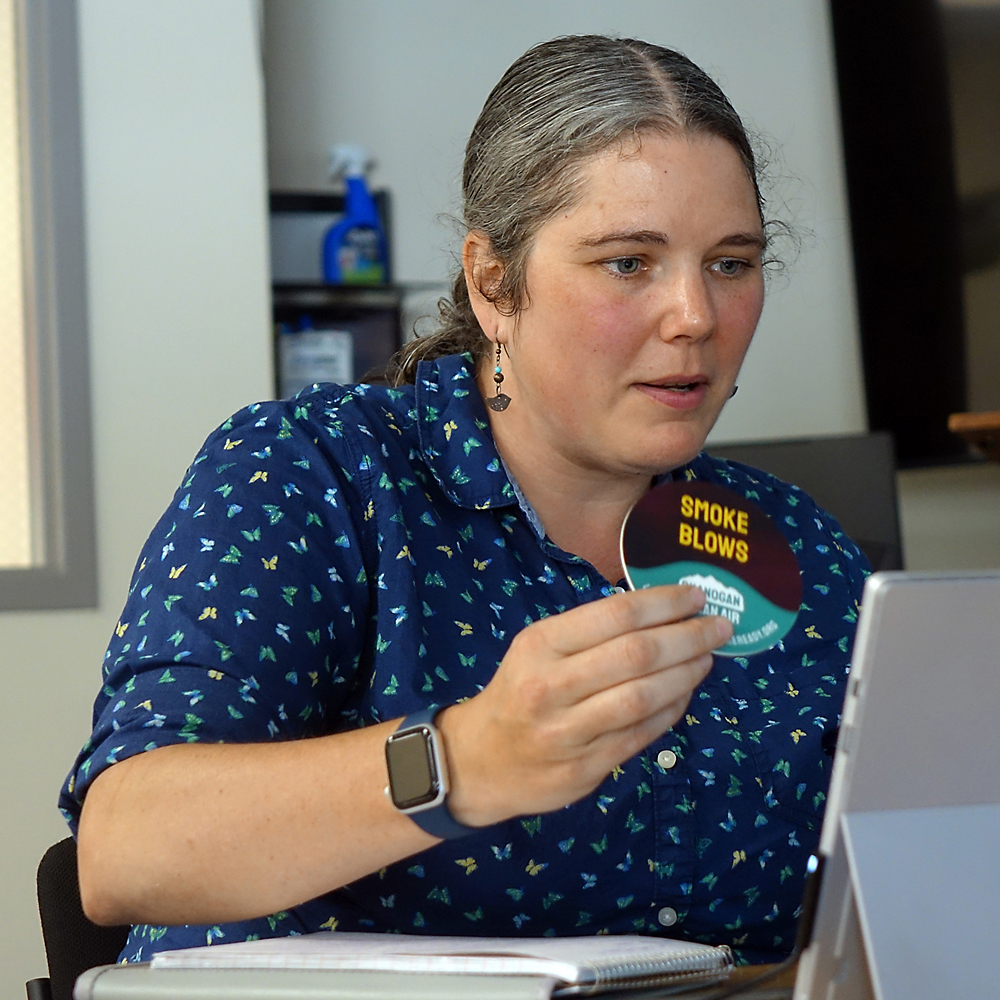
Lake Chelan was the focus of its first Boat Inspection Program this summer. Funded by a National Park Service grant, the mobile watercraft inspection unit visited all of the lower valley’s launch sites inspecting vessels from kayaks to motor craft for invasive species.
Throughout the summer, the unit inspected a total of 1,285 vessels. Old Mill Bay had the highest numbers with 146 boats inspected in June and another 207 in July. Over the course of the summer, inspectors inspected 610 vessels at Old Mill Bay.
The total observed number of boats entering and exiting from the lake throughout the period was 3,110 vessels of which the percentage of boats counted and participating in the inspection program was 41.32 percent.
“The public response was overly positive,” said Lisa Dowling, Chelan County Natural Resources Department and Keep It Blue organizer. “Old Mill Bay was the most popular launch site.” The program is currently funded through 2024.
Quagga and Zebra mussels are a major concern throughout the Northwest. So far it is thought that these invasive species which, if introduced to Washington waterways, would cost millions of dollars to eradicate.
One boat that traveled across the states from the Great Lakes to Lake Chelan had been inspected and red flagged as having mussels on the hull. At some point in its travels to Lake Chelan, the vessel was locked to its trailer. “The owners were not happy,” said Dowling. However the boat received a hot water pressure wash before being allowed on Lake Chelan.
Idaho, Montana and Washington have inspection stations located at main interstate and highway corridors coming into their respective states.
Washington’s program is operated by the Washington State Department of Fish and Wildlife which runs boat inspection sites at its borders in the south, north, east and in Cle Elum to catch boats traveling from the west side of the mountains.
The program augmented by the Idaho and Montana program has so far been successful in keeping invasive species out of Washington’s waterways.
Dowling also commented on the CD3 waterless wash station at Lakeshore Marina.”It’s great to see folks using this system,” she said.
Water Quality report:
Lake Chelan Research Institute’s director Phil Long was unable to attend the Watershed Planning meeting and Dowling reported that the long term monitoring of lake quality continues under the yearly funding from the City of Chelan, Lake Chelan Reclamation District and Chelan County.
The CCNRD with NPS funding is working with Lakeshore property owners to deploy artificial substrates for private boat launches to help detect quagga/zebra mussels. This is funded through private donations totaling $35,000 per year and includes an educational component.
For the next three years, the LCRI will continue its Periphyton (freshwater organisms attached or clinging to plants and other objects projecting above the bottom sediments) project with a $90,000 grant per year from Chelan County PUD.
Another $30,000 for the next 18 months will help with 25-Mile Post Fire monitoring at the mouth of 25-Mile Creek, 0.3 km down lake and location that hasn’t been determined yet. This work is being conducted by the Natural Resources Department and Cascadia Conservation District. This work will begin this Fall and continue into the Spring.

Water rights:
Andrea Reyes, Ecology, is working with 18 water right applications in Batch 4.
The biggest question is the actual quantity of water remaining in the Lake Chelan system. According to Reyes, that answer will be quantified at the December meeting, but currently, if the City of Chelan received the 3,800 acre feet they have applied for, any water right application following would be in negative numbers.
“I will be talking to the rest of the Ecology to see what is available,” said Reyes. CCNRD director Mike Kaputa remarked that some decision needs to be made.
In other business:
The Goose poop study is still being quantified by Ms. Sarkin who is working on her masters at the University of Colorado.

Geese have become a major problem on the lake. “We are evaluating the management impacts,” said Kaputa. “There is an increase in the goose population and they are not leaving.”
It is believed that the geese are one of the major contributors of near shore lake quality.
The US Geologic Survey recently completed a bathymetric survey of the entire lake bottom and also took core samples that will be studied. Most of the cores are made up of volcanic pumice and other soft sediments.
On Thursday, September 21, Keep It Blue will be in Chelan for its summer event. This is in association with the Farmers Market and other Thursday activities taking place.
Keep It Blue will have two booths; one with a microscope and the other displaying ROV footage of underwater scenes including the USGS underwater landslides.
It was reported that PUD’s Marcy has left the agency for another job and the Lake Chelan Watershed Planning Unit doesn’t know who will take over the Fishery Forum.
Chelan District Ranger Paul Willard reported that the Resource Damage Assessment from the Holden Mine remediation has taken a back seat because of Phase II.
Willard also reported that a fire break behind Manson from Echo Ridge to Cooper Ridge will be worked on “Hopefully we will have a design by 2024,” said Willard. The proposed fire break will not be a normal break but a small tree thinning operation that will be designed to slow a wildfire down so firefighters can battle the blaze.

 All Things Lake Chelan