


By Richard Uhlhorn
Water quantity and availabilty:

As promised at the prior Lake Chelan Watershed meeting in October, Andrea Reyes gave a quick update on water supply in the Lake Chelan Valley at the December 13 meeting.
Future water availability has been somewhat of a concern in the Valley, but currently, water availability is not a real concern. “We are trying to meet and talk about what it might look like in the future for those applications we can’t process,” said Reyes.
The Department of Ecology has been in the process of permitting water rights since a 2019 partnership with Chelan County’s Natural Resources Department when the Lake Chelan Coordinated Cost Reimbursement Program began. They have just finished up with Batch 3. “We are currently working on Batch 4,” she said. “We are waiting for the final permits.” So far 33 permits have been granted and/or are being permitted.
There are two options available to secure a water right. Under Option 1, Ecology has a consultant who investigates and processes the paperwork. The applicant pays a fee for the Consultant’s work. Option 2 is a Domestic Use Permit that can be processed through a program at Chelan County and is less expensive.
Of the 65,000 acre feet the PUD has provided, 5,258 acre feet remain. When the process reaches the City of Chelan’s request for 3,800 acre feet, the remaining acre feet left in the current reserve would drop to 1,269 acre feet available.
Farther down the line, the Lake Chelan Reclamation District (LCRD) has applied for 2040 acre feet for irrigation, frost and heat protection purposes which if granted would drop the availability to (779.88) acre feet making any remaining applications unable to be permitted.
Ecology and it’s consultant are permitting one batch per year. After Batch 4, there are 22 more batches to be processed before the water runs into a deficit.

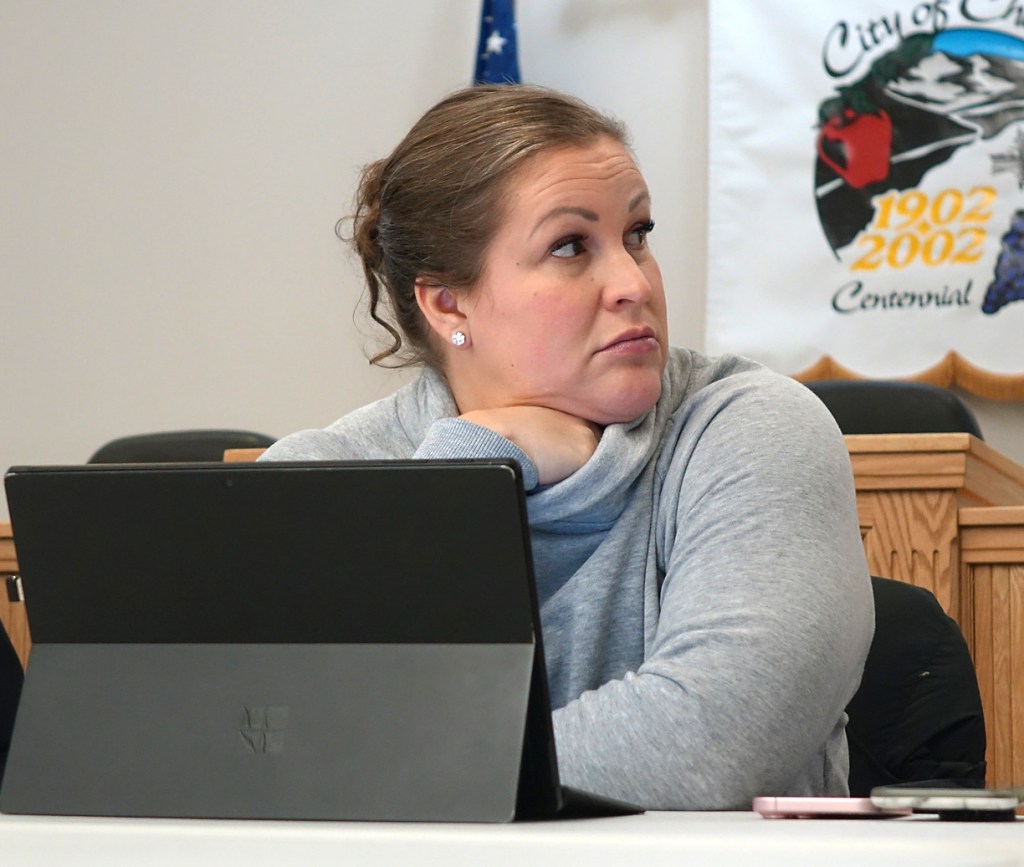
Chelan County Commissioner Tiffany Gearing asked Mike Kaputa, Chelan County Natural Resources Director, if the Casino is outside the agreement with Ecology. Kaputa replied that they would be with the Reclamation District.
Another question asked was whether or not the PUD might release more water for use when Ecology reaches the reserve limit. Reyes replied that Ecology has a meeting with the PUD in March.
At some point, there will not be enough water available for future development. Chelan County augmented available water with a 1,000 acre feet purchase from Bear Mountain Water District which is being used for the domestic program.
In a separate conversation on December 18 with Rod Anderson, LCRD manager, he stated that the District has a huge water right on the irrigation side. He also said that the District is in the process of trying to buy out the Bureau of Reclamation contract.
“This would give us a lot more flexibilty,” said Anderson. “It would make ourselves whole again.” Eliminating the District from the Bureau would allow them to be more efficient. “It is our intention to maximize our use. We have a January meeting with Ecology in January to state our case,” Anderson said.
Anderson also said that the District is open to water banking with the County. “We are hoping Ecology will work with us.”
The Reclamation District is exempt from “use it or lose it”, but Anderson said they could potentially lose water, so the District has put water into a water trust.
From the report by Reyes and the fact that it takes a year to process a water rights batch, it will be at least two years before water availability will be a major concern.
Water Quality:

Lake Chelan Research Institute’s director, Phil Long, shifted gears from his normal water quality report and presented bathymetric data collected by the U.S. Geological Survey.
He showed the graphics of the lake where the bathymetric data was collected using modern sub-bottom profiling equipment. The USGS spent three weeks recording the bathymetry of the lake bottom with the exception of lower Wapato Basin because it was too shallow.
The profiles showed scarps, sediment fans from tributaries and areas where underwater slides have taken place.
An interesting fact from the survey removed Lake Chelan from its classification of being the third deepest lake in the U.S. by 442 meters (1,436.5 feet deep). “You lost some of your standing,” said Long.
They also collected core samples from the bottom and are working on them at their laboratory.
Water Clarity:
The lake’s circulation behaves differently at different time of the year. Long said visibility was bad in November, but clarity at Lakeside Park at one point was the clearest than it has ever been according to Long.
Chelan County PUD is providing $90,000 per year to study near shore growth. One lakeshore homeowner stated that the underwater rocks are so slippery his grandkids can’t stand on them.
Long said there is now talk about constructing a sewerline to 25 Mile Creek. Geese are still considered one of the major polluters on the lake. “There are more water fowl on the lake now than ever before,” said Long.
AIS Program:

Lisa Dowling and Steve Lesky updated the group on the AIS Program. “There is a high level of concerns,” said Dowling. “The public is in favor of us ramping up our efforts and are largely in favor of watercraft inspections at Lake Chelan.”
City Councilman John Olson asked if the water craft and hydroplanes that come to the lake for events are inspected? Steve replied that generally these boats are kept in spotless condition and are pretty low on the radar.
Over the summer weekends when the boat inspections were being accomplished, the crew inspected 1,412 watercraft and noted 3,758 watercraft entering the lake. “There is only a certain number of boats that can be inspected without backing up boats at the launches,” said Lesky.
In other news:
Kaputa said that the department has submitted a grant application to the Bureau of Reclamation for $100,000 per year for a period of three years. “We won’t hear if we got it for 10 to 11 months,” said Kaputa.
The funds would be used for water supply issues, water quality research and all the other things going on in the lake. The Forest Service would supply planning support.


 All Things Lake Chelan