Bull trout feasibility study shared with Lake Chelan Watershed group


by Richard Uhlhorn

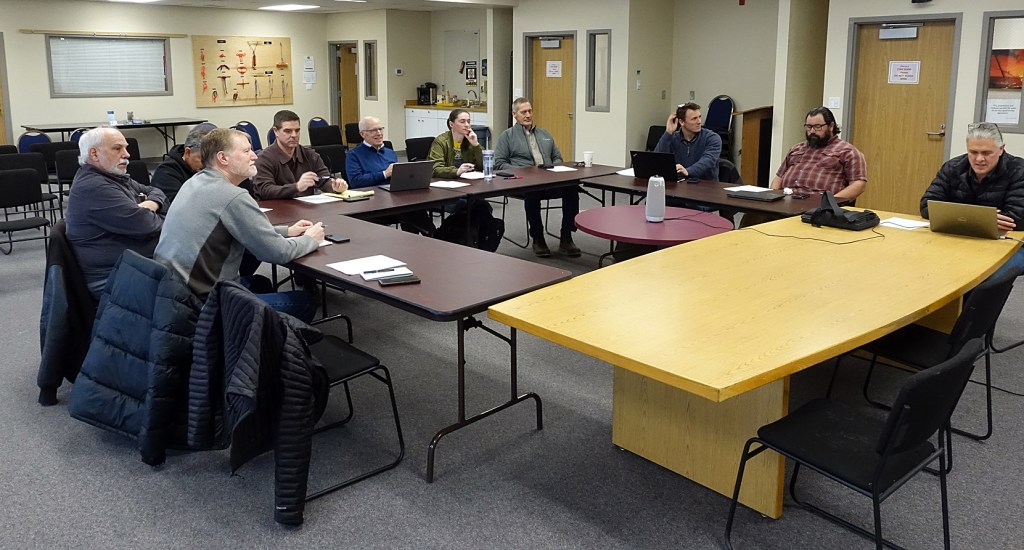
As promised the US Geological Survey finally presented its feasibility study on the re-introduction of bull trout into the Lake Chelan watershed at the Lake Chelan Watershed Planning Unit meeting held on Wednesday, June 18.

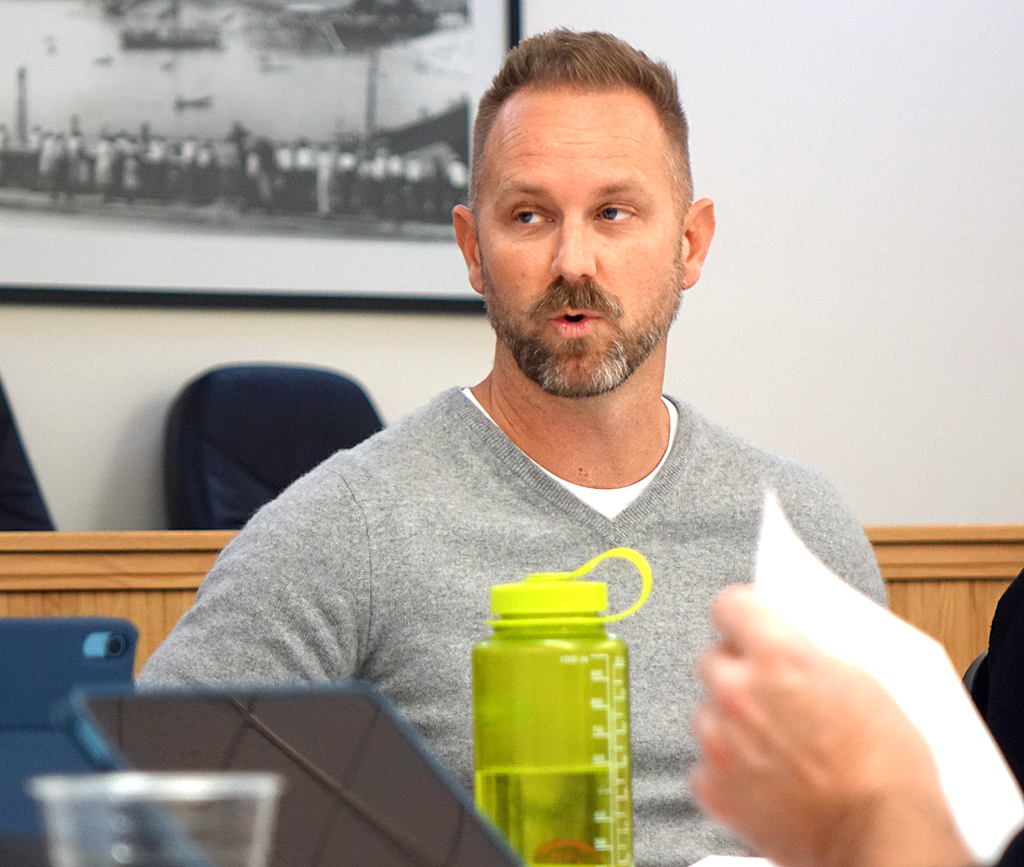
Joe Benjamin, USGS representative, told the group that the feasibility study came out of a group participation. He described the process and said the group met once a month for one year but has not made a final decision on the re-introduction.

The group began the process with a demographic model for each of the 12 streams being considered. Environmental conditions were taken into consideration with wildfire and flooding being looked at having an impact.

The group considered adding 30 adults for each of five years adding fish to one stream at a time. “We were focused on adding 30 adults to the system,” said Benjamin. “Some streams don’t perform well.” They looked at Flick Creek, the upper Stehekin and Agnes Creek.

Benjamin stated that the group considers the lower Stehekin River and Bridge Creek better environmentally. “These fish are capable of moving around from Bridge Creek to Stehekin.”

Other considerations include egg survival and fish residing in Lake Chelan. “What could happen. They could make it to the lake, get big and come back and spawn.” The group is also considering a predator discount in Lake Chelan. Predator discount acknowledges that predators consume fish that might otherwise be harvested by humans for profit. This predation represents a “social cost” or lost economic opportunity for the fishery.

Joe Heinlen, a long time fishing guide on Lake Chelan, remarked that there is a healthy king salmon fishery on the lake and that these fish spawn in the Stehekin River. The introduction of bull trout could be devastating to king salmon populations.

Benjamin replied that the group hadn’t taken a look at the recreational opportunities. “We didn’t see an impact but will take a closer look at that.”

Mike Kaputa, Chelan County Natural Resources Director, stated that he would like to see a little context to this issue. “Bull trout are threatened, but reside in other local water systems, but are locally extinct.”

Kaputa mentioned Phil Archibald, who was a fishery biologist with the Entiat Ranger District who was curious about why bull trout disappeared in Lake Chelan. Bull trout was a native species in the Lake Chelan watershed before it disappeared in the late 40s or early 50s. Since that time, the fish has been considered extinct. In addition, the fish populations in the last 75 years has changed in Lake Chelan.

Chinook salmon have flourished in Lake Chelan in recent years. Joe Heinlen, fishing guide and ex-fishery technician with the Washington State Department of Fish & Wildlife, says these salmon spawn in the lower Stehekin River and would become bull trout food if re-introduced.

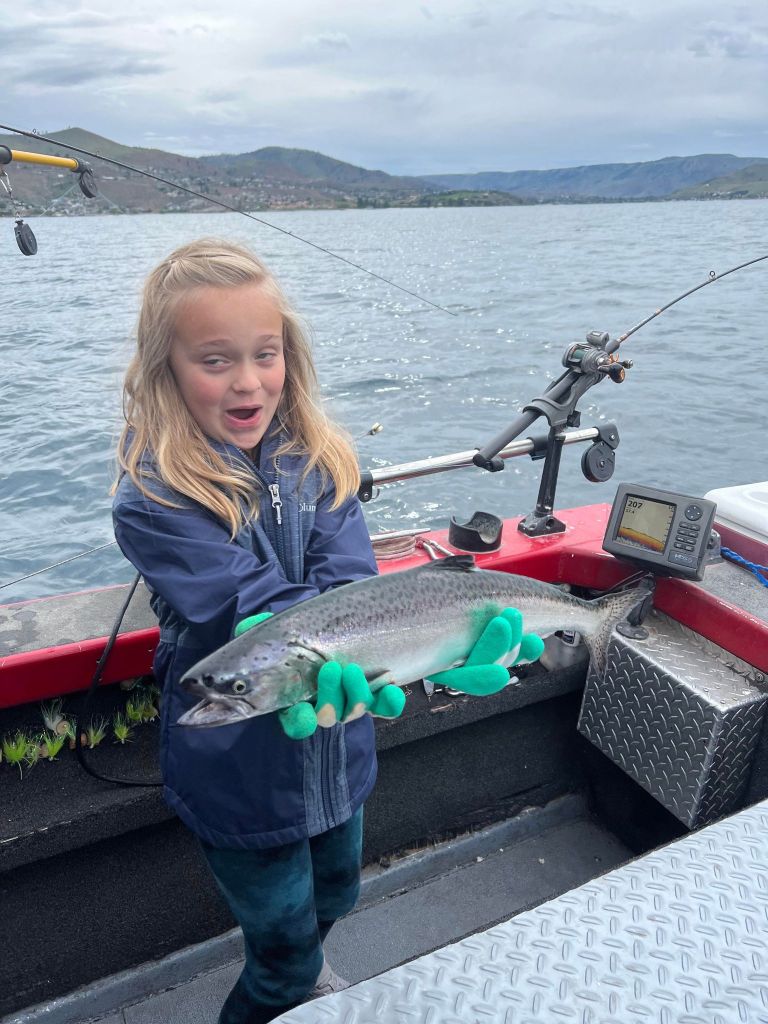
Today, the lake sports an extremely healthy recreational fishery. Lake trout, chinook salmon, kokanee, cutthroat and bass are the primary fish in the system. Chinook and kokanee spawn in the Stehekin River.

According to local fishing guides, the re-introduction of bull trout to the tributaries of Lake Chelan would be the death of the healthy recreational fishery currently in place. “Bull trout are the wolf of fresh water,” stated Joe Heinlen, a fishing guide. “They will eat everything!”

“There is a simmering interest in this,” said Kaputa.

The lower Stehekin River is prime spawning ground for both chinook salmon and kokanee. If bull trout were re-introduced to the system, professional fishing guides claim that Lake Chelan and the Stehekin River’s recreational fishery would be damaged.

Benjamin said, “There is no current proposal to re-introduce bull trout. My question… Is there a question?”

The next step according to Benjamin are public meetings. “We are starting that process officially today. We will see how we want to proceed in the future.”

Bull trout:
Bull trout was a native species in the Lake Chelan watershed before it disappeared in the late 40s or early 50s. Since that time, the fish has been considered extinct. In addition, the fish populations in the last 75 years has changed in Lake Chelan.

Today, the lake sports an extremely healthy recreational fishery. Lake trout, chinook salmon, kokanee, cutthroat and bass are the primary fish in the system. Chinook and kokanee spawn in the Stehekin River.

According to local fishing guides, the re-introduction of bull trout to the tributaries of Lake Chelan would be the death of the healthy recreational fishery currently in place. “Bull trout are the wolf of fresh water,” stated Joe Heinlen, “They will eat everything!”

“Bull trout and West Slope Cutthroat (native species) co-existed in Lake Chelan until the Bull trout disappeared,” said Heinlen. Heinlen added that since that time, Chinook salmon, Lake trout, Rainbow trout, Kokanee salmon, Small and Large Mouth Bass and other species have been planted in the lake.

“These fish constitute an important sport fishery,” said Heinlen. “An introduction of Bull trout could be devastating to sport fishing in the Valley,” he added. “Taking a chance of destroying a world class fishery is crazy.”

“They (bull trout) will eat a lot of kokanee,” said Heinlen. “They also don’t stay in one spot and that’s got me concerned.” Heinlen did say it would take up to 10 years to get them established.

Is your home defensible against wildfire… Ruby Theater program outlines the areas fire assets

by Richard Uhlhorn

The Ruby Theater held its second presentation on Fire in the Valley featuring Chelan Fire and Rescue Fire Chief Brandon Asher and Fire Commissioner Mark Donnell. This event took place on Thursday evening, May 1 to a crowd estimated at 50 interested residents.

Chief Asher described Chelan Fire and Rescue’s mission that includes responding to structural fires and wildfire incidents in a district that is 125 sq. miles. In addition, the district responds to all EMS calls, automobile accidents including victim extraction, water rescue on the lake, Regional rope rescues and Hazmat situations.

Chief Brandon Asher and Fire Commissioner Mark Donnell presented fire information at the Ruby Theater on May 1.

The district has just hired two new career firefighters to fill out its needs for all situations. It also carries up to 35 volunteers and is always looking to attract more. The largest percentage of volunteers are over the age of 60. While there are a number of younger volunteers Asher said, “It’s hard to attract younger men and women who have jobs and are unable to respond to calls.”

The district responds to more wildfire than it does structural incidents, but its firefighters are trained in both types of firefighting techniques.

Wildfire is the most worrisome event that visits the valley each year. It is rare that the Lake Chelan Valley escapes having a wildfire during the fire season with the exception of small brush fires that are contained quickly.

Asher described the downtown fire siren as a method of letting people know that a second alarm fire or incident is ongoing. “When it goes off, step outside and look around,” said Asher. “We also try to inform the public through KOZI Radio and social media.”

Fire Commissioner Mark Donnell moved to the Valley in 2015 as a retired westside paramedic and firefighter. He quickly signed up as a volunteer and eventually ascended to the position of Fire Chief before retiring.

Donnell presented his story as a Union Valley resident. He shared photos of his Union Valley home prior to preparing it for a wildfire incident to a photo of the work he has accomplished to save it in a wildfire event.

A fire plane dumps water on a section of wildfire in Union Valley in 2022.

In September, 2022, a wildfire started adjacent to the Union Valley road just below his residence. This fire was human caused, probably by a spark from a trailer hitch safety chain dragging on the ground.

Chelan Fire and Rescue’s initial attach crew responded quickly which helped with control, but command was handed over to the Department of Natural Resources (DNR). At the time, Asher reported that a unified command was set up quickly. “We had good response on this fire.”

Donnell along with many other residents living in this fire prone area have taken advantage of a program offered by the DNR to make their property defensible.

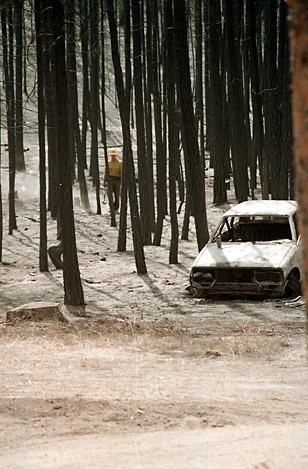
It wasn’t always like that. Prior to any real defensible space being created in Union Valley a resident in summer of 2001 started a trash burn on his property which got away and ended up burning 46,000 acres on Union Valley.

A fire investigator inspects damage left by the 46,000 acre 2001 human cause fire.

The DNR and residents began working on defensible space and are still at it.

The most recent and devasting fire in the Valley began in 2015, burning 56,000 acres of land before it was contained. This wildfire began as a lightning strike on Chelan Butte. Eventually an afternoon wind picked it up and it roared through the south end of Chelan causing millions in damage to homes and fruit warehouses.

Wildfire has a long history in the Lake Chelan Valley. Most of the lakeshore has been engulfed over the years and many thousands of acres have been consumed.

Last year’s Pioneer Fire was just the latest in a series of large wildfires at a cost of millions to the taxpayer. The Pioneer Fire has been reported to have cost $100 million plus to contain.

The August 1970 lightning fire in the Entiat and Chelan Mountains burned a total of 122,000 acres. This fire can be seen in a documentary narrated by Loren Green, as detailed by HistoryLink.org and YouTube. Chelan residents had to evacuate and were sheltered in an evacuation center, but returned the next day to scenes of devastation. 

In 1994, the Tyee Complex, another lightning fire that began in the Entiat drainage burned over 135,000 acres and forced evacuations of resident on the south side of Chelan.

As more and more people move to the area and build homes in the wildland/urban interface, constructing defensible space is an important part of building here. The following link will help you negotiate the ins and outs of working with the DNR.

Defensible Space – Prepare Your Home | WA – DNR

Chelan moves into 2025 running

by Richard Uhlhorn

Golf Course Nordic Grooming:
This past weekend the Lake Chelan Nordic Club groomed trails at the Chelan Golf Course. In addition to having ski trails close to town, the driving range hill is open to sledding.

Agtourism code change:
The current code allows for homestays equaling 4 units on 10 acres (low density) or 20 units on 10 acres (high density).

Ag Tourism including homestay units is currently permitted in the following zones: SUDs; Residential multi-family; Warehouse and industrial; and Tourist accommodation areas for a total of 2,524 acres available.

John Ajax was promoted as the permanent
City Planning Director

Proposed changes:
Homestay provision is removed from the code across all acreage;
Ag. Based STR rental licenses will only be allowed in Special Use Districts (701 acres)

  • 2.5 or 5 acres
  • At least 51 percent of the land must be actively used for agricultural purposes
  • Licenses would allow rentals for a single family home, an ADU, or winery with up to five units.
  • Only a maximum of 10 licenses would be issued per year.

President signs Water Resources Development Act
The City of Chelan is the potential recipient of a $9 million dollar grant from the U.S. Army Corp of Engineers. The City will have to ask the Army Corps for the funding that has been in the congressional process over a year. The funding will be used specifically for a new one million gallon reservoir.

Public Works Director explained that the department will be seeking other grant opportunities to complete funding for the East Chelan Water Project.

Thanks to Representative Schrier, Senator Murray and Senator Cantwell for helping push Chelan’s request through the governmental process. “Their effort has been pivotal to realizing the inclusion of this project in the bill,” said Mayor Erin McCardle.

The bill was signed into law by President Biden on January 4, 2025. Called the Thomas R. Carper Water Resources Development Act, it will fund projects like flooding, improvement to ports, and help restore ecosystems.

With the passage and signing of this legislation, Chelan can now apply for competitive funding through the Army Corps of Engineers’ Section 219 program, bringing this essential Chelan project closer to realization. The funds would be administered by the Corps of Engineers.

Public Works is hoping to fully fund the reservoir project with federal grant funds. According to Public Works Director Jake Youngren if additional funds are needed the Tax Increment Financing program is an option to be used.

Originally called the East Chelan Water Project, the new name is the Lake Chelan Water Resiliency and Efficiency Project. The total cost of the project is estimated at $19 million dollars and will include a new booster pump and water lines from the western city limits to the east end where the reservoir will be constructed.

Public Works Director Jake Youngren told the council that the project would be stand alone. “It doesn’t affect our current system.” Youngren went on to say that public works will have to have further conversations with property owners along the proposed corridor.

Ecology grant loan:
A $5 million dollar grant application for a sewer line replacement project from Safeway all the way down to the Chelan Wastewater Treatment Plant did not make the Department of Ecology’s hardship level, however, Youngren told the council that Ecology has offered a $7.5 million dollar loan. This loan would be paid back in five years at a 6 percent interest rate.

“We would only pay on what we would draw,” said Youngren. The project is under contract for design. “There are a lot of components to work out.”

Parks:
Parks Director Paul Horne reported several rate and fee changes for the Chelan Golf Course.

Parks Director Paul Horne explained the department’s plans for the summer of 2025 which will include new parking kiosks.

Powered golf cart leases were changed from $600 to $650 for annual single lease and from $800 to $850 for the annual family lease. Annual cart storage was raised from $400 to $425. A small bucket of driving range balls will now cost $7 instead of $6.

The Parks Department will be purchasing new parking kiosks for Don Morse, Lakeside and Lake Chelan Marina. “The new system will be more robust,” said Horne. Visitors will be able to pay via R code or the City Parks website. Parking enforcement will be much easier.fd

Other improvements will take place at Lakeside Park where day camping will not be allowed. The park will have specific hours of operation and park users will not be able to bring in “the kitchen sink” and stay all day said Horne. “We will hopefully have a reduction in parking and garbage and waste will also be better.”

The department plans on outsourcing enforcement with the Sheriff’s Department helping.

Several residents have suggested that a gate be installed at the entrance to the park. “It’s an intriguing idea,” said Horne.
City Social Media:
Chad Coltman, director of communications, presented the City’s Social Media policy for staff and council members. The city’s social media platforms currently include Facebook, Instagram, LinkedIn and Nextdoor.

Chad Coltman, communications director explained some of the aspects of the City’s new Social Media Policy.

Chelan City Council will meet in an official council meeting on Tuesday, January 14 beginning at 6 p.m. Residents are encouraged to attend.

Water rights – water quality -boat inspections – discussed at Lake Chelan Watershed Unit meeting

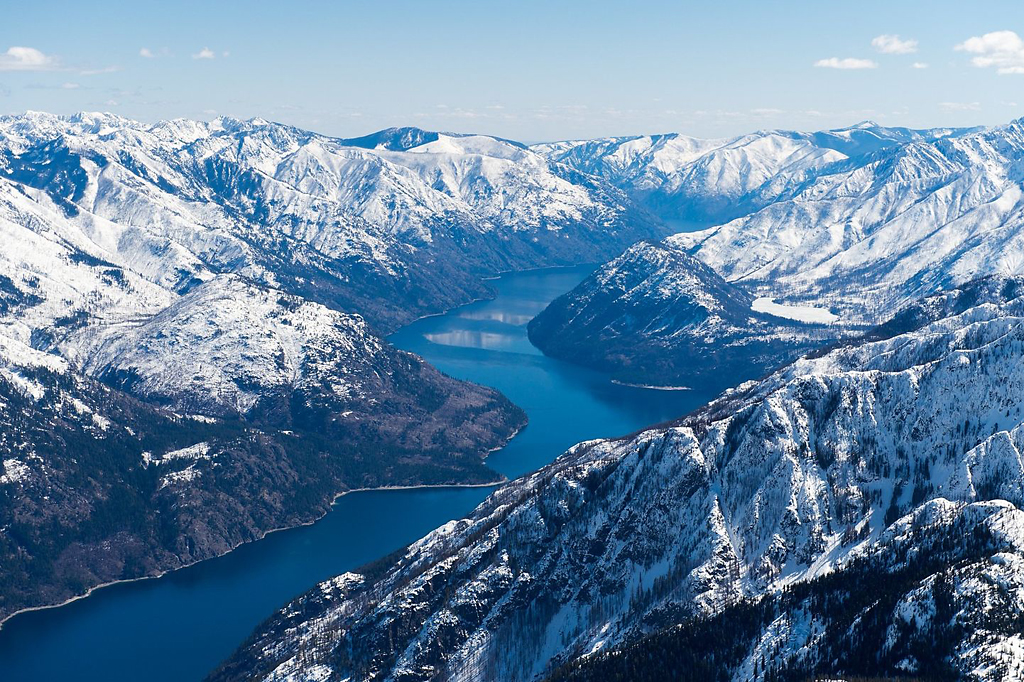
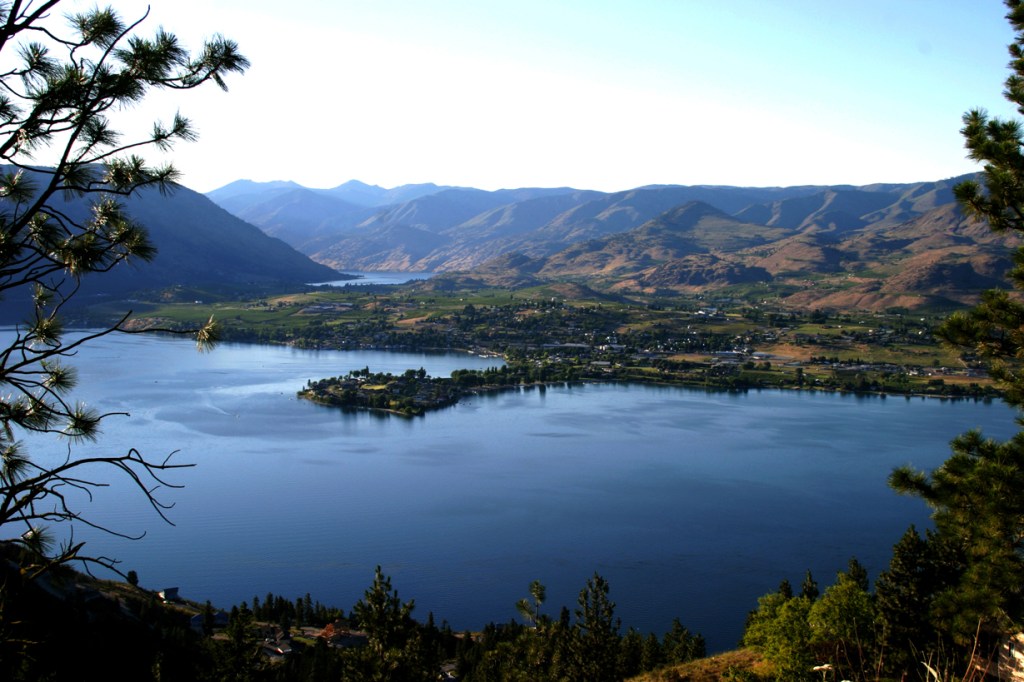
Lake Chelan stretches 55 miles from Chelan to Stehekin.

by Richard Uhlhorn

The Lake Chelan Watershed Meeting was held on December 11 at the Chelan Fire Department. The next meeting will be held on March 17.

Water Rights:
Years ago, Chelan PUD granted the Lake Chelan Valley 60,000 acre feet of water from Lake Chelan to use for development and agriculture. Today, the Valley has used most of those acre feet and only 5,373 acre feet remain before there is no more water available for water right applicants.

Department of Ecology’s Andrea Reyes explained at the Lake Chelan Watershed Planning Unit’s December 11 meeting that the water rights coordinated cost reimbursement application process was moving forward. “Once the remaining water is used, there will be no more water left,” she said.

RH2 Engineering is currently processing nine applications which will be done by the end of the year. “We will be through with Batch No. 4 by April,” said Reyes. “We will review if we get additional water or not.”

Doug England asked how the water right requests are being evaluated and how the needs far into the future.

Anthony Dunn – Ecology, said they were looking four years down the road. “You have to be able to show a need within a particular period of time.”

Mike Kaputa – County Resources, said there are only 15 applications remaining. Dunn replied that if Batch 5 uses up the water, there is nothing left to process. “There are no reserves to allocate from.”

If Ecology actually grants a 2005 request from the City of Chelan for 3,800 acre feet of water for future development needs, only 1,173.62 acre feet would remain. Both the Lake Chelan Reclamation District and Chelan County have requests for 2,040 acre feet and 1,000 acre feet.

The 2015 request from the Reclamation District would break the reserve remaining to (875.33) acre feet leaving no reserve to allocate from unless more water could be found or the PUD granting more acre feet to boost the reserves. Those applications below the Reclamation District’s request would not be able to process their water right applications.

Phil Long and his new assistant at the Lake Chelan Research Institute updated the attendees on data collection and analysis.

Water Quality:
Phil Long, director of the Lake Chelan Research Institute, reported that the Institute has made some incredible progress in the last several months. “We gone over several years of data,” said Long.

The Institute has hired Anna Galipeau, an environmental scientist from Montana State University in Bozeman. She has been working on data collected since 2018 with funding from the City of Chelan and Chelan County. “She’s been analyzing what has been going on which is helping us immensely” said Long.

Long reported that the Institute is also analyzing the impacts of the 25 Mile Creek fire; updating the State of the Lake report.

Funding for these studies have come from private donations, the US Forest Service, Chelan County and the PUD.

Advertisement for funding the Lake Chelan Research Institute’s ongoing research efforts.

He reiterated the importance of doing research work and shared data put together by Galipeau on phosphorous loading, chlorophyl and dissolved oxygen. Long provided an overview of water clarity data taken from three different sites on the lake from 1990 to 2020. Water visibility ranges from 12 meters to 18 meters depending on the year and time taken with a Secchi disk.

The Institute uses a multi-parameter probe to instantaneously take measurements at different depths in the water column. Long told the Unit that the Institute will be making this data available to anyone who wants to see it.

AIS report:
Steve Lasky, Chelan County resource specialist, reported on the 2024 mobile voluntary watercraft inspection program on the lake. These inspections are conducted on Friday, Saturday and Sunday at the various boat launch sites around the lake from May through October.

AIS Resource Specialist with Chelan County Natural Resources.

This year, 2,830 inspections were conducted with inspections at Old Mill Bay reaching 638 vessels in July and another 143 in August. The inspectors inspected 204 vessels at Riverwalk Park Launch and another 382 at Lakeside Marina in August.

“This year the highest impact was at Old Mill Bay,” said Lasky.

Long suggested putting cameras at the launch sites to count how many vessels are entering the lake versus the number of vessels being inspected. This year 3,753 boats were recorded launching or coming out of the lake.

In other business:
Four hundred acres of Milfoil is growing in Lake Chelan. Asked if diver assisted test to remove milfoil was checked for regrowth, Long replied that there was regrowth. The diver assisted program is extremely expensive and is probably not the solution to removal of milfoil

Stormwater update: Travis Denham, Public Works engineer, reported that the city is preparing a stormwater management plan that includes outfalls, storage basins in the city. The study should be completed in May or June, 2025.

City Engineer Travis Denham (left) gave a report on the city’s stormwater management plan that is being developed.

Fishery Forum was not ready to report, but Mike Kaputa asked that they report on the forum at the next meeting in March. The draft report on bull trout re-introduction to the Lake Chelan tributaries

Lake Chelan Research Institute funding:
Funding comes through a variety of sources, but the Institute also encourages private donations to help further its research and hopefully keeping Lake Chelan clean.

For more information on funding, go to Lake Chelan Research Institute – Clear into the future

Lake Chelan has the highest concentration of DDT in the Nation

Apple growers in the Lake Chelan Valley applied 80,000 kilograms of DDT to their orchards from the 40s to 70s. It is now leaching into the lake from drains, groundwater and streams.

by Richard Uhlhorn

DDT LOADING STUDY:
Clay Patmont, Anchor QEA, LLC, told the Watershed Planning Committee that Lake Chelan still has the highest concentration of DDT in the nation.

DDT (dichloro-diphenyl-trichloroethane), developed as the first of the modern synthetic insecticides in the 1940s, was used extensively in Lake Chelan Valley orchards from the 1940s to 70s. An estimated 80,000 kilograms (140,800 ibs.) of DDT was applied to some 12,000 acres over the years. “There was a lot of DDT applied,” said Patmont.

The Toxics Control Demonstration study in 2010 and 2021 found no DDT levels declining. The study sampled lake trout for DDT levels which was used to determine the level of DDT in the lake.

Sources of this contamination comes from ongoing leaching of the material in orchard soils to the lake from orchard drains, groundwater and creek drainages.

Patmont stated that natural recovery would not achieve risk reduction goals for at least 100 years, but directing drainages through wetlands (Dry Lake) could substantially reduce DDT loading by 70 to 95 percent.

With a $1.3 million dollar grant from the Department of Ecology, the plan is to 1. – characterize current DDT loading into the lake in 2025; construct a one to two acre prototype wetland in 2026; monitor the wetland’s effectiveness in 2027 and 2028; and if successful; expand wetland treatments in the entire basin where it was applied.

Quagga/Zebra Mussel concerns:
“It has never been more important for people to stay alert,” said Stephen Lesky. This comment came during a report on Quagga mussels being detected in the Columbia River Basin and the potential of this invasive species being introduced in Lake Chelan.

Multiple occurrences have been noted in the Twin Falls, Idaho area where 375 miles of river dumps into the Columbia River.

Quagga and Zebra mussels are species that can cause millions of dollar’s worth of damage if allowed to attach and grow in water passage ways, irrigation canals, dams and fish hatcheries. The economic impact is estimated at $100 million per year.

The Washington State Fish and Wildlife Service has five primary boat inspection stations for vessels crossing into the state. “We are trying to protect Washington waters,” said Bush.

Currently the state is free of quagga mussels. “When we find an occurrence there will be a rapid response.”

Stephen Lesky, manager of Lake Chelan’s boat inspection program, said, “We are seeing an increase on boats on Lake Chelan.” The Lake Chelan Boat Inspection Program is in its second year on a grant from the National Park Service. “People appreciate what we are doing with the program.”

The economic risk of quagga or zebra mussels entering Washington waters is huge.

“We are excited about what you are doing,” said Bush.

Bush described another major concern with zebra mussels that are showing up in moss balls being sold to pet stores. “There are 22 wholesalers that have received contaminated products in Washington. Ultimately, we know it is an ongoing problem.”

Fish and Wildlife has received $1.8 million in State funding and another $1.83 million in Federal funding to combat the potential influx of invasive species to Washington waterways. The WDFW Response Team has met with 27 retailers and are taking significant steps to stop the importation of zebra mussels in moss balls to pet stores. “We are planning for the worst case scenario.”

Water Quality – Phil Long

Phil Long – Lake Chelan Research Institute

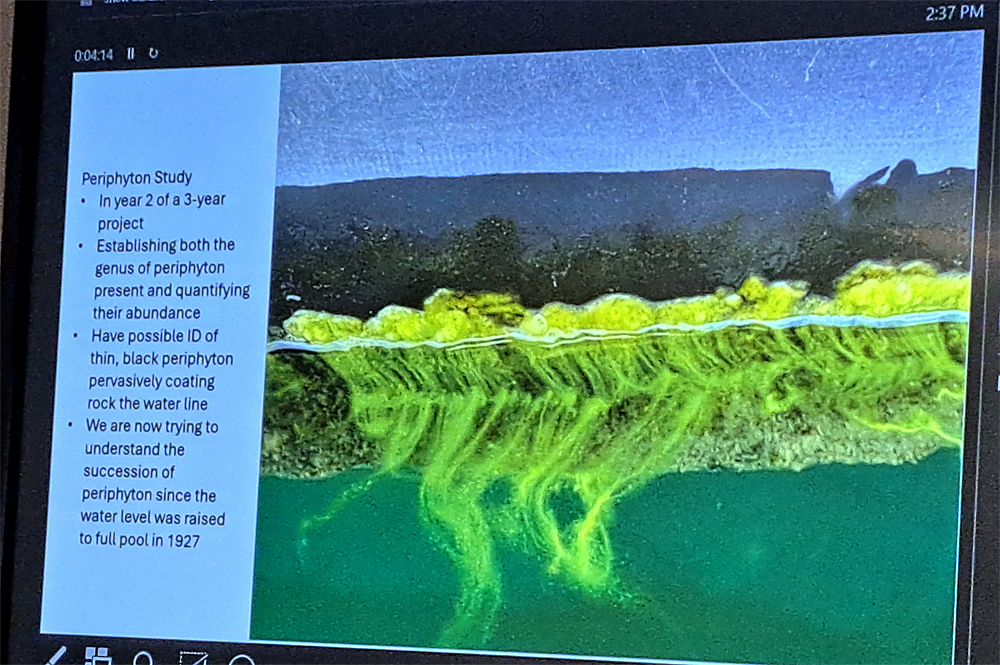
“We had a busy summer,” said Long. “Things look fairly normal.” However there is ongoing concern with the algae growth on rocks and docks in the near shore areas of the Wapato Basin. The Lake Chelan Research Institute is hoping to identify the different species that are present.

Phil Long captured this photo of periphyton growing in the Wapato Basin.

Long stated that the Institute is in the second year of a three year study funded by the PUD. “This is not what you want growing on our shores and docks,” said Long.

Water rights:
Ecology continues to work with RH2 Engineers on water right applications and reported that seven more property owners have received their certificates. “We are moving forward.”

Round Table:

Mike Kaputa – Chelan County Resources Department director.

Fishery Forum… PUD will give an update in December

NPS is conducting temperature monitoring and creel surveys.

Mike Kaputa reported that the committee should have a report on the reintroduction of bull trout December. A draft manuscript has been circulated for peer review amongst the committee members.

The next meeting will be in December.

Morse issues warning about fire danger

by Richard Uhlhorn

Chelan resident addresses council about fire danger:
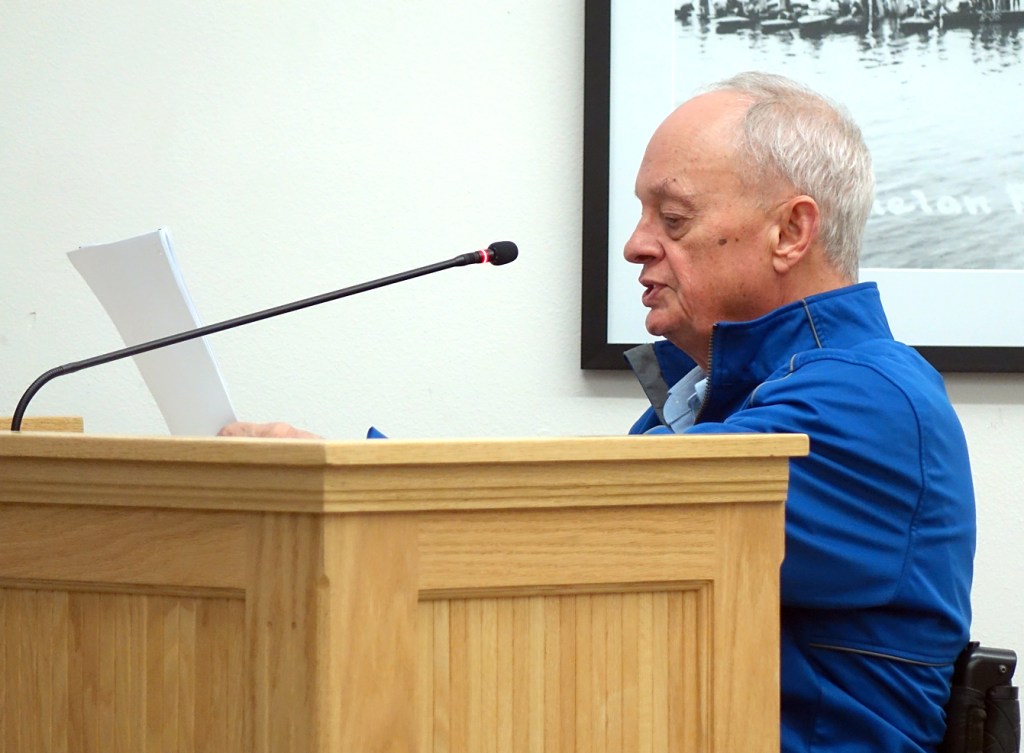
Last night’s City Council meeting got off to a bang when Stan Morse rolled up to the microphone to speak during the Citizen Comment section.

Chelan resident Stan Morse addressed Tuesday evening’s City Council meeting about the dangers of wildfire in 2024.

Morse, a lifelong Chelan resident, has been before the council with his wildfire message a number of times and last night’s rant took on a more serious slant.

“My home insurance was cancelled,” he said. The reason stated was the danger of wildfire raging through the community. He said he was able to replace his home insurance from $1,200 to $2,500 and added that he was sure other homeowners were facing the same situation.

Morse brought up the devastating 2015 Chelan Complex that almost erased southeast Chelan from the community and took down warehouses at Chelan Fruit causing millions of dollars in damage. “That fire is going to come back and back again,” he stated.

His concern is the brush, woody debri and other burnable materials that clog the neighborhoods and could be the difference between an out of control wildfire or one that is containable.

In September, 1991, a man made wildfire on Chelan Butte burned most of the Butte.

As an example of the dangers, Morse brought up the Paradise Camp that killed 85 and burned 18,000 homes and the Medical Lake fire which destroyed homes and killed two.

In 2014, the Carlton Complex Fire burned 256,108 acres and destroyed 353 homes.

He blamed the City for not helping cleanup burnable material within its jurisdiction. “The City has said it’s the Fire Department’s responsibility. It is not the Fire Department’s responsibility.”

That claim has been refuted by a city mayor who states it is up to the fire department to clean up burnable debris.

He added, “It’s different from when I was a kid,” said Morse. “Whether it’s climate change or something else, it is the reality we live with.”

Editor’s note:
Most of us remember the 2015 fire. Many new people have bought and moved to the Chelan area since that time without any context of how dangerous our wildfire situation can be. All it would take is a large wind event and fire to sweep through the area to wipe out many homes from Manson to Chelan and on the south shore just like the 2015 fires did.

The reality of Washington’s fire danger is this:

                As of 2019, it was estimated that 951,000 homes sit near forests threatened by wildfire that includes a swath from Spokane southwest to the Columbia River and running north past Wenatchee into the Methow Valley. In all, 25 communities are exposed.

                Since 2019, the number of threatened homes has grown as people from other areas move into eastern Washington to escape the overcrowded urban areas.

A large warehouse destroyed in the 2014 Carlton Complex.

Free Yard Waste Disposal:
On April 20th (Earth Day,) and April 27, residents can dispose of vegetation to help reduce wildfire risk and decrease impacts to air quality from outdoor burning.

The Chelan Transfer Station will accept trees and limbs less than 8 feet long and 12 inches wide. Not accepted are rocks, plastic, bags, grass clippings, sod, root wads, and weeds.

This is an opportunity for home owners and the City to help reduce the risk.

This issue has been a long running one with Stan Morse and he should be thanked for keeping it in front of the City and Community.

Earth Day:
This year’s Earth Day celebration on Saturday, April 20, will focus on wildfire dangers. Chelan Fire and Rescue, the Forest Service, Cascadia Conservation District along with students from Chelan High School’s Biology Class taught by April Slagle will be on hand to answer questions, handout information and warn people the need to reduce fire danger from around their homes.

Scott Beaton, one of the driving forces behind Chelan’s first Earth Day celebrations, has been the individual who has orchestrated this year’s Wildfire information.

One of the ideas behind bringing in the biology class is an opportunity to map the areas around the Valley that could contribute to a massive wildfire. “There are all kinds of ravines in the valley full of fuels that have never burned,” said Beaton. “We would like to map some of those areas.”

In addition, Beaton said the Forest Service came up with really good questions of which one was how Chelan residents view fire danger versus the agency. Beaton stated the 70% of homeowners surveyed felt they had done a good job of protecting their homes while only 28% of fire personnel agree.

This coming fire season is predicted to be one of the driest seasons in years and everyone is encouraged to be very careful.