

by Richard Uhlhorn
AGRITOURISM
“The apple industry has been in trouble in the Lake Chelan Valley for the past several years,” said real estate broker, Bob Knauss of New Horizon’s Real Estate. “The problem is that everyone is getting a paycheck except for the grower.”
Several growers in the Manson Project that I’ve talked to have either received a bill from their warehouse or just haven’t made any money from their crops over the past several years.
All of this can be attributed to rising labor costs, declining returns on investment, more regulations like overtime requirement for ag. workers, and a declining environment for small scale operations.
This raises the obvious question; Is farming, as in growing apples, sustainable in the Lake Chelan Valley and can agritourism be the savoir of what remains of what once was one of the World’s best apple growing regions? The answer is probably not!

The City of Chelan has been struggling to update its Agritourism Code to allow growers to remain in business.
The entire subject of Chelan’s agritourism code came up when developer Tim McDonald’s Bluewater Terrace application to develop 20 homestays, an event center and winery with production facilities on family property utilizing the City’s current agritourism code.
McDonald, who claims that he was led to believe over the past seven years that his application would be approved had the rug pulled out from under him when the Chelan County Hearing Examiner ruled that his 20-homestay proposal on his application would not be allowed, but that he would be allowed to construct his winery and event center.
The proposed 20 homestay units was the monetary grease that would allow McDonald to move forward with the project. However, the old orchard land which was annexed into the City as a potential residential subdivision has no current agriculture on it. McDonald wanted to plant five acres of grapes to meet the agritourism code.
In meetings that has included the public, Planning Commission and City Council, John Ajax, current Community Development Director, has been seeking input to help rewrite the agritourism code in hopes of retaining agriculture in the City.

The input has not been helpful. Having discussed the issue with several old orchardists, one current grower, a Planning Commissioner, a past City Councilmember and John Ajax, himself, a code change allowing a more agreeable code to help preserve orchards is probably a non-starter to helping preserve small orchard plots, particularly when the land, according to Olson is much more valuable as real estate.
The retired growers, Mark Gores and Harold Schell, both stated that it costs upwards of $250+ per bin of apples delivered to a warehouse. If the variety being delivered is not making money, the grower comes away from a year of expenses without anything in his/her pocket.

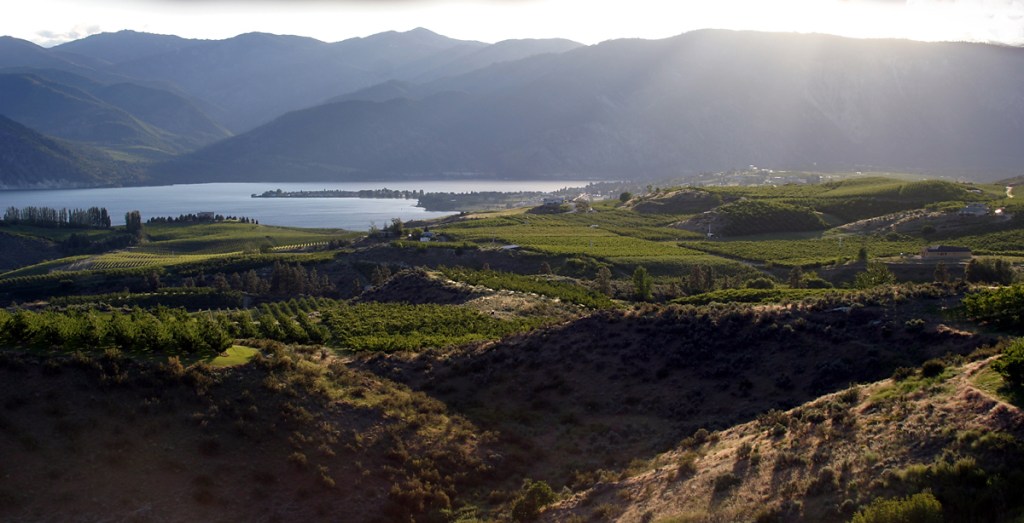
The reality is that within the confines of the City and UGA, there are only 300 acres of orchard left and depending on what variety the grower is producing, these orchards may disappear in favor of the real estate value of the land.
Regardless of what the Planning Department does, they have until the Comprehensive Plan update to consider killing it, writing a new code for agritourism, or just leaving the current code alone.


 All Things Lake Chelan