PARKS BOARD HANDS COUNCIL HOMEWORK ON GOLF COURSE FUTURE

The Chelan Golf Course is a popular with both resident and visitors to the Valley. In 2025 it posted close to 30,000 rounds of golf bringing in $1.7 in gross revenue but is facing numerous financial issues that the city council and parks department are addressing.

by Richard Uhlhorn

On June 18, 2026, the Chelan Parks Board Advisory Committee and Parks Director Audrey Cooper sat down with Chelan City’s administration, staff and city council to address issues facing the city owned golf course.

Parks Director Audrey Cooper described the workshop’s agenda as looking at three areas of concern at the golf course, including its Structure and Oversight, potential Operational Improvements and Physical Improvements.

“We want to have a conversation,” said Cooper. “We want to give you some of the high points… revenue is strong, but the course has financial pressures.”

Cooper stated some facts that came out of Richard Singer’s National Golf Foundation report including that labor costs are at a high 62.23%. She also mentioned the City’s Interfund charges that are due to increase to 313% in 2026 to help fund city departments that have no revenue sources.

Singer’s report stated that the golf course is a popular in a tourism driven market bringing in$1.7 million dollars in revenue in 2025 off nearly 30,000 rounds.

Following are the results of the report and Parks Board recommendations including questions for the city council to consider.

STRUCTURE AND OVERSIGHT RECOMMENDATIONS:
1. Continued self-operation – gives the city the highest amount of control.
2. Management Contract – Full Service Management Contract – Fixed fee. City earns all revenue and is responsible for all expenses, capital improvements and pays a management fee.
Property Lease. – Full Service Management Contract, some loss of control over operations. Fee would be 3 to 5% of total gross revenue. 3. – Property Lease – Not considered.

  • PARKS BOARD RECOMMENDATIONS:
    1. – Continue self operation but implement operational recommendations from plan, and create a capital funding strategy.
    2. – Only explore a management contract option with funding for capital improvement identified.
  • QUESTIONS FOR COUNCIL:
    Should staff explore management company interest, and under what conditions.
    Should staff explore property lease interest, and if so, under what conditions.

OPERATIONAL RECOMMENDATIONS:

  • The Parks Board supported the recommendations in the NGF report with an emphasis on F&B Service, retail improvements, driving range and marketing.
  • QUESTIONS FOR COUNCIL
  • What direction does Council have regarding the prioritization and implementation timeline for any of the recommendations which included Driving range improvements, Enhanced marketing and Technology focus, Improved food and beverage convenience for golfers, Improved retail space and merchandise, A LOGO refresh, Increased annual pass fees, and enhanced golf programming.
  • CAPITAL IMPROVEMENTS:
  • Highest Priority is infrastructure improvements including Irrigation ($4.5 to $5 million), tee boxes, cart paths, select greens, restrooms, drainage, and the parking lot.
  • Lower priority would include maintenance facility repair, bunkers etc.
  • Investments to improve revenue including a Pro-Shop remodel, driving range and patio improvements.
  • QUESTIONS FOR COUNCIL
  • Which funding tools should the staff evaluate further?

Parks board advisory committee member Matt Engstrom remarked that the city should consider keeping total control over its assets.

Councilmember Tim Hollingsworth that the consultant mentioned it would be difficult to come up with a management system.  

Councilmember Agustin Benegas added that the city needs to keep in mind the increasing number of youth that are using the course. Chelan High School has a strong golf program and the Boys and Girls Club is introducing golf to young children.

Advisory board president, Linda Reister added that there is a lot of talk about increasing fees and the need for a capital fund for infrastructure issues.

Mayor Erin McCardle asked, “What is that we could be doing?” City Administrator Laura McAloon stated that from a policy level, the issues need council approval. “What options do you want to pursue,” she asked.

Councilman Brad Chitty stated that the council needs to follow the board’s recommendations and come up with a business plan. “We need one,” he said. Councilman Shane Collins agreed that the city needs to come up with a plan. “We can certainly do that,” said McAloon.

Benagas said, “We have a problem. What can we do now?” He suggested that the council, staff and parks department have a roundtable and throw out ideas. “We need a thorough review based on reality.”

Irrigation issues:
Funding the capital needs is a major issue facing the golf course, particularly the irrigation system which is estimated to cost $5 million to fix. Several ideas came up including the use of lodging tax dollars with a tax levy combination, grants which Cooper says the department can now pursue. McAloon said that all of those ideas are currently being looked at.

Mayor McCardle ended with saying, “It is an incredible asset to our community.”

There will be much more coming regarding the city’s golf course and solutions to its many issues.

2026 State Golf Champion Carson Clinton watches fellow golfer Grant Coonrod tees off during a high school competition. Chelan and Manson high schools have a growing number of student athletes choosing golf as an activity that they can take with them after graduation. Carson is headed to Lewis and Clark College to play golf at a collegiate level with a goal of eventually becoming a professional.

Proposal for Ag-Tourism code changes to allow for STRs

Paid Advertisement

by Richard Uhlhorn

“We are trying to preserve farm-lands and keep the area rural,” Chelan Planning Director John Ajax told a Chelan City Council Workshop on Tuesday, September 3

John Ajax – Community Development Director

Ajax and the Chelan Planning Commission have been struggling to come up with a change to the City’s existing Short Term Rental Code that would help keep the 400 acres of existing farmland in agriculture and maybe help create new agriculture.

Preserving agriculture in Chelan’s Special Use Districts to help keep the rural feel and cultural heritage is high on Chelan’s list of projects.

The change would provide options for property owners and growers to keep agriculture in place while supplementing their income with Short Term Rentals in Chelan’s Special Use District’s (SUD).

SUDs are designed to support and enhance agricultural operations; allow low impact educational and commercial uses for tourists that complements agriculture while providing an opportunity for lower density residential housing developments.

Proposed changes in the code would provide property owners and growers one STR on a minimum 2.5 acre lot with 1.25 acres dedicated to agriculture. The code’s criteria would require $1,000 profit after two years of operation.

Property owners would be allowed a single family home and one accessory dwelling unit (ADU) which can be attached or detached and can be up to 1,200 sq. ft. Both can be used as STRs.

This code change, if adopted would enhance agriculture tourism and promote small scale farming which would hopefully help preserve farms and potentially develop future farmers. It would also remove the Homestay Unit provisions of the code.

The proposal, if adopted, would help maintain a rural landscape and support the City’s goals of trying to preserve ag land and the fast disappearing rural landscape. It is hoped that keeping 1.25 acres in agriculture would help maintain Chelan’s agricultural roots and scenic open spaces while giving the land owner an opportunity to supplement the property owner’s income.

Much of the orchard land that used to exist in Chelan’s Special Use Districts has already disappeared.

Discussion:
Councilman Tim Hollingsworth noted that farmers are struggling with increased costs, regulations and low revenue returns. “I would like to see the revenues that STR’s bring in.” Hollingsworth said some incentives need to be built into the code.

Mayor McCardle remarked, “What incentives do we have… we don’t have kids taking over the farms.” Hollingsworth replied that vacation rentals might be incentive enough.

Ajax said, “It’s tough finding that balance when land is going for $310,000 per acre. It’s very hard when an orchard doesn’t make a profit.” Hollingsworth replied that he thinks the City is on the right track.

Conclusion:
If the code revisions are adopted, will they help keep the “Cultural Agriculture Heritage” alive in the Chelan Special Use Districts or will farmers make the hard decisions to tear the orchards out and sell their property at a premium price? Only time will tell.

Agritourism is probably dead in Chelan… not the valley!

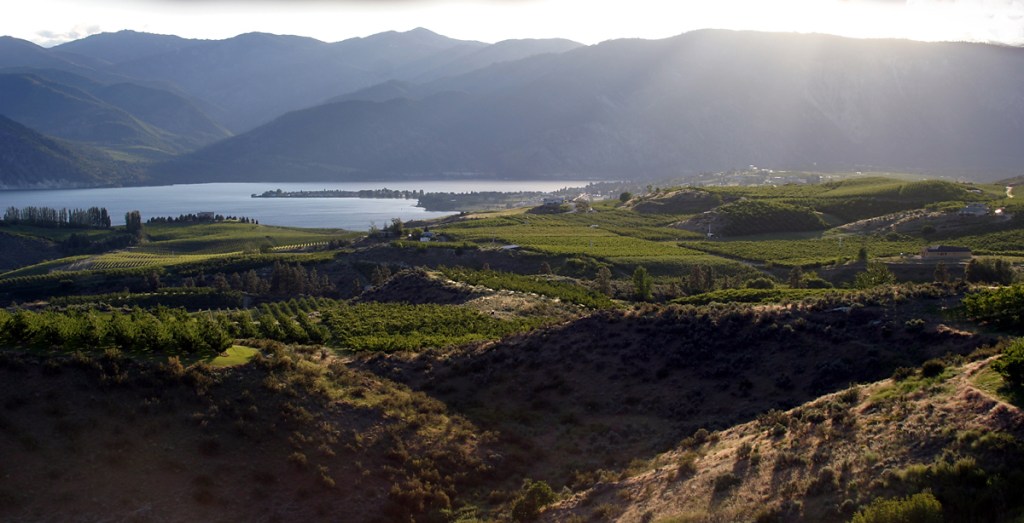
The rolling hills of the Lake Chelan Valley used to be full of apple orchards. Today, as growers fail due to increasing growing costs, regulations and other forces, the orchards are taken out and replaced with subdivisions, vineyards and wineries.

by Richard Uhlhorn

AGRITOURISM
“The apple industry has been in trouble in the Lake Chelan Valley for the past several years,” said real estate broker, Bob Knauss of New Horizon’s Real Estate. “The problem is that everyone is getting a paycheck except for the grower.”

Several growers in the Manson Project that I’ve talked to have either received a bill from their warehouse or just haven’t made any money from their crops over the past several years.

All of this can be attributed to rising labor costs, declining returns on investment, more regulations like overtime requirement for ag. workers, and a declining environment for small scale operations.

This raises the obvious question; Is farming, as in growing apples, sustainable in the Lake Chelan Valley and can agritourism be the savoir of what remains of what once was one of the World’s best apple growing regions? The answer is probably not!

paid advertisement

The City of Chelan has been struggling to update its Agritourism Code to allow growers to remain in business.

The entire subject of Chelan’s agritourism code came up when developer Tim McDonald’s Bluewater Terrace application to develop 20 homestays, an event center and winery with production facilities on family property utilizing the City’s current agritourism code.

McDonald, who claims that he was led to believe over the past seven years that his application would be approved had the rug pulled out from under him when the Chelan County Hearing Examiner ruled that his 20-homestay proposal on his application would not be allowed, but that he would be allowed to construct his winery and event center.

The proposed 20 homestay units was the monetary grease that would allow McDonald to move forward with the project. However, the old orchard land which was annexed into the City as a potential residential subdivision has no current agriculture on it. McDonald wanted to plant five acres of grapes to meet the agritourism code.

In meetings that has included the public, Planning Commission and City Council, John Ajax, current Community Development Director, has been seeking input to help rewrite the agritourism code in hopes of retaining agriculture in the City.

The input has not been helpful. Having discussed the issue with several old orchardists, one current grower, a Planning Commissioner, a past City Councilmember and John Ajax, himself, a code change allowing a more agreeable code to help preserve orchards is probably a non-starter to helping preserve small orchard plots, particularly when the land, according to Olson is much more valuable as real estate.

The retired growers, Mark Gores and Harold Schell, both stated that it costs upwards of $250+ per bin of apples delivered to a warehouse. If the variety being delivered is not making money, the grower comes away from a year of expenses without anything in his/her pocket.

The reality is that within the confines of the City and UGA, there are only 300 acres of orchard left and depending on what variety the grower is producing, these orchards may disappear in favor of the real estate value of the land.

Regardless of what the Planning Department does, they have until the Comprehensive Plan update to consider killing it, writing a new code for agritourism, or just leaving the current code alone.

Manson Community Council visits numerous issues facing community

by Richard Uhlhorn

Manson Community Forum:
Instead of sending out a Community Survey, the Manson Community Council in association with the Manson Chamber of Commerce, Fire District and Parks Department will hold a live Community Forum at the Grange Hall on June 18, from 6 p.m. to 8 p.m. “We need to bring the community together,” said Kari Sorenson.

Street Parking Issues:
Chelan County Commissioner Tiffany Gearing told the Council that Chelan County has placed survey markers along Pedoi Street designating County right of way. Many of the residents have infringed on the County right of way and Gearing said, “Letters are being sent out to the property owners.”

The letters are asking the residents to remove any improvements they may have made within the right of way, and if they don’t comply, the County will come through and do it. The residents have until June 3 to comply.

The right of way will be turned into parking. One issue that came up was the residence across the street from the Parks Building that have installed a retaining wall in the right of way. Asked if it would be removed, Gearing said she wasn’t sure.

Gearing was also asked where does the county stop writing notices of right of way violations. Gearing replied, “If it is not causing a problem, we don’t enforce.”

She was asked if the County was considering the Botske problem all the way up. “If they would pull that Island out so trucks can make that turn it would stop them from using Wapato Way,” said one resident. Gearing replied she would look into that.

Sorenson added that she would like to see no boats, boat trailers or overnight parking on Pedoi. “Is that something Manson can get added to the code,” asked Sorenson.

Colville Tribe Plans:
Gearing said she and other county officials took a field trip with the Colville Tribes. “They were great to work with and told us the Casion/Hotel plan was on hold indefinitely.”

“We realize they don’t have to share, but we need to plan around what they are doing,” she stated.

Bob Goedde, Chelan liaison with the Council remarked that the tribe is currently looking at building a casino complex in Tri-Cities where there are 250,000 residents. “They asked us for a letter of support for the Manson casino,” said Goedde. “We asked for more information, but never got more information.”

Gearing also reported that Chelan County was trying to bring back a lumber mill. “The goal is to promote forest health,” said Gearing who added that the DNR, Forest Service and Representative Schier’s office are all on board with the plan.

STR regulations:
Gearing was asked if there had been any changes to the County’s Short Term Rental codes? “Nothing has happened yet,” she said. She said solutions to the code have been discussed and getting rid of some of the irrelevant language in the code. The proposed changes will go to the County Planning Commission in July or August along with a public comment period on any changes proposed.

Stehekin Master Plan:
Gearing also reported that the County was working with the National Park Service, PUD and residents of Stehekin on a Master Plan for the area. “There are so many interest groups making it difficult to manage,” she said.

Chelan liaison:
Chelan Councilman and Manson Community Council liasion Bob Goedde reported on several issues currently on the City’s agenda.

He mentioned the City Parks PROS plan that will be released soon and can be read on the Parks website. The Six Year Transportation plan and the Transportation Benefit District being proposed to the City’s residents.

Agritourism with wineries being allowed to have homestay units or not.

Goedde also mentioned the current Our Valley Our Future program and suggested that the Manson Council appoint someone to the committee.

Regarding Goedde’s efforts to make the old Woodin Avenue Bridge two-way again, Goedde said the difference in Chelan’s transportation woes would be changed dramatically if the bridge was turned back to a 2-way bridge. “It would reduce traffic flow on Johnson and Saunders from 600 vehicles to 400 vehicles.”

Manson resident John Olson however, shot back that idea and explained the entire public process that turned the bridge into a one-way into town. “Eventually someone would be killed which would be a City liability if turned back,” explained Olson. He added that there were engineering reports and council approval to change the bridge to a one-way when Mike Cooney was mayor.

Agritourism:
Brian Patterson brought up the Bluewater Terrace proposal to construct 20 homestay units on land that is not currently in agriculture. He said that the developer, Tim McDonald was led to believe the City code supported his proposal, but that the Hearing Examiner denied the homestay proposal.

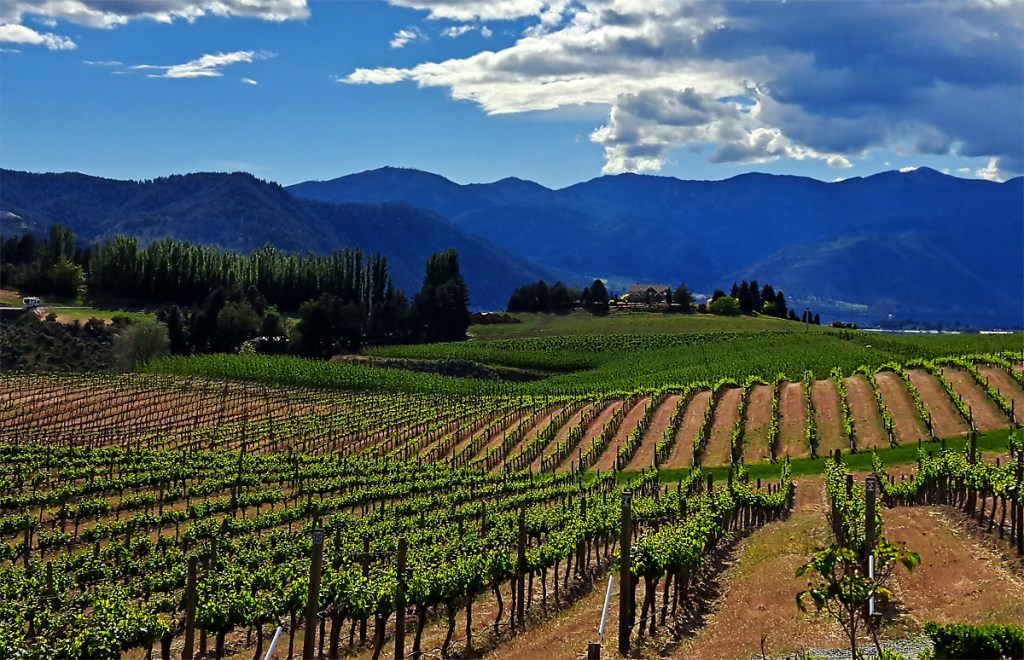
Wine grapes and apple orchards still dot the landscape in Manson.

The Bluewater Terrace development has led the City planners and Planning Commission to try and rewrite the agritourism code so it will accommodate a much broader development plan. “Hopefully, there is a compromise (code) without completely destroying agriculture,” said Patterson.

Sorenson stated that her family received a bill from Manson Growers after delivering their crop to the warehouse. “Even our blueberries. We can’t sell our blueberries.”

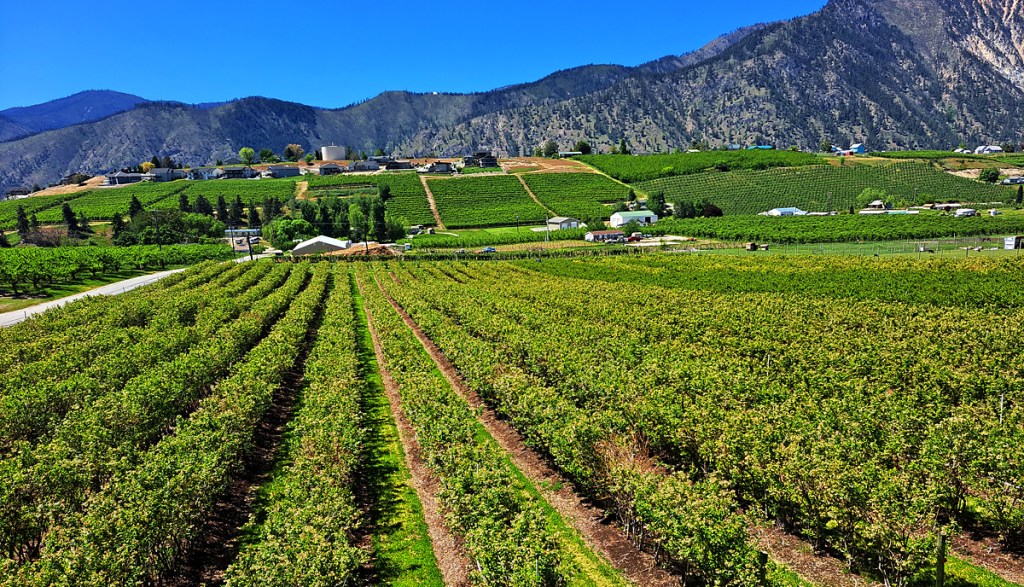
This view of Blueberry Hills blooming blueberries with apple orchards and new homes dotting the horizon creates an entire new look to the Manson district’s landscape.

Gearing remarked that the couple who started Chelan Valley Farms came to the Valley to start an agritourism business. “They figured out how to make it work,” she said.

Olson replied that it is going to take some smart thinking. “Every farmer is just hanging on.”

One visitor remarked that people want to keep the trees. “People are going to lose the very reason they are coming here.”

Orchardists are being forced to make hard decisions. Should they keep farming, or should they pull their trees and turn the acreage into housing lots. A new agritourism code that allows reasonable expansion of homestay may be the only alternative for them to stay in the farming business.

Sorenson added, “I don’t know whether we still qualify as a rural village anymore.”

The Manson Community Council meets on the third Wednesday of each month and the community is encouraged to attend. The meetings are held in the Parks Meeting room beginning at 6 p.m.