BOYS AND GIRLS CLUB GRAND OPENING A HUGE SUCCESS

by Richard Uhlhorn

Approximately 100 valley residents took the time out of their busy lives to attend the Grand Opening of the Lake Chelan Boys and Girls Club at the Community Center.

The much anticipated opening of the Lake Chelan Boys and Girls Club at the Community Center culminated into a huge gathering of interested parents and Valley residents along with numerous youngsters who will benefit from the facility.

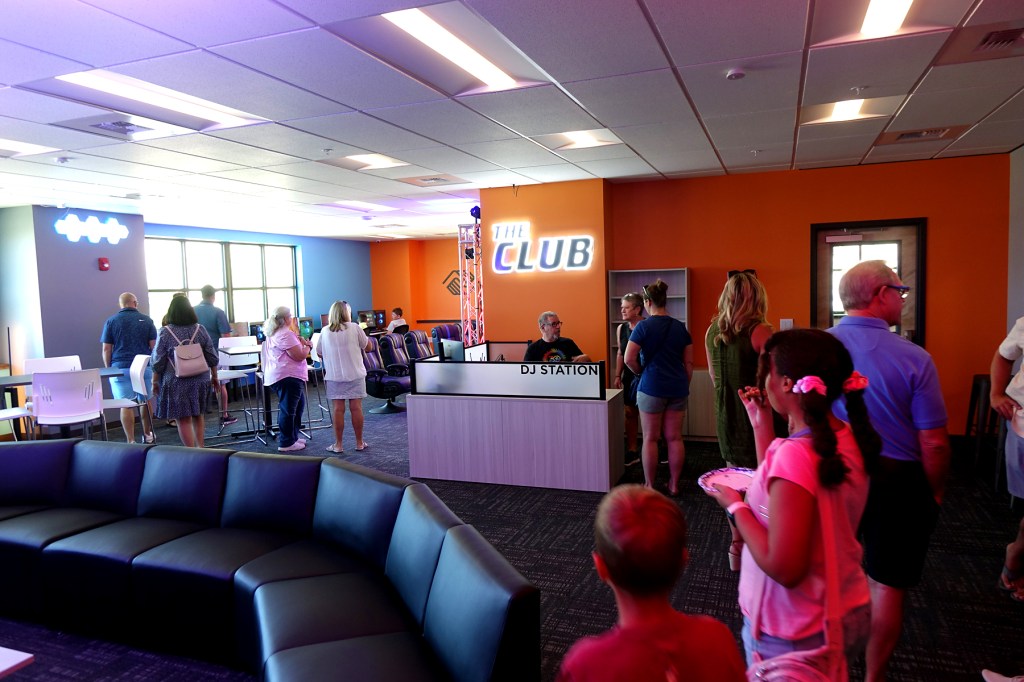
The space is large, bright and inspiring.

Walking into the club is immediately awe inspiring. It’s an upbeat, electronically driven space for kids to enjoy from computers to gaming stations to an actual podcast place. The space is open, bright and stimulating.
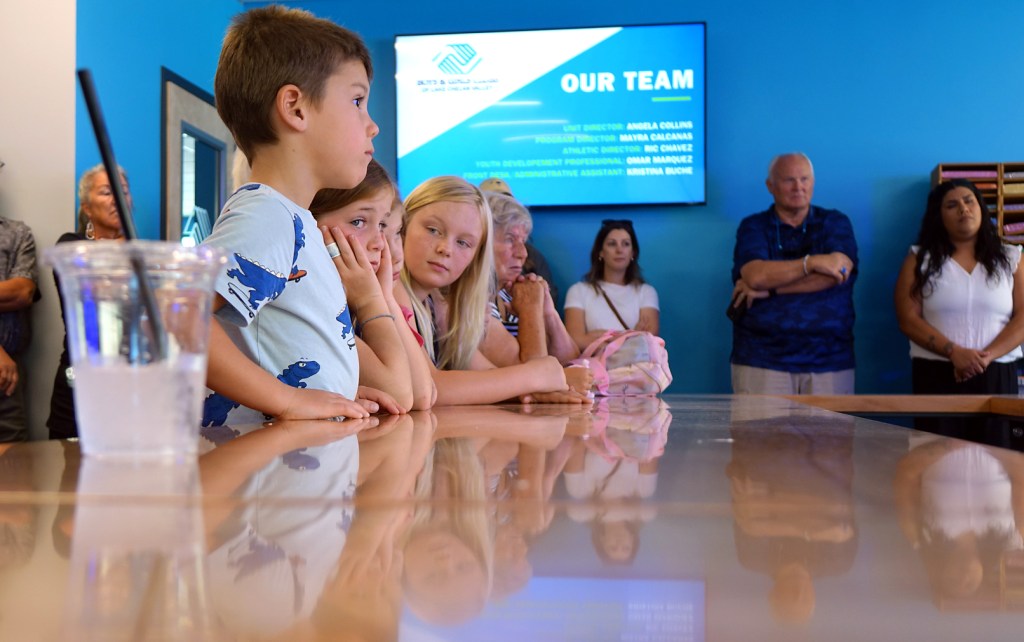
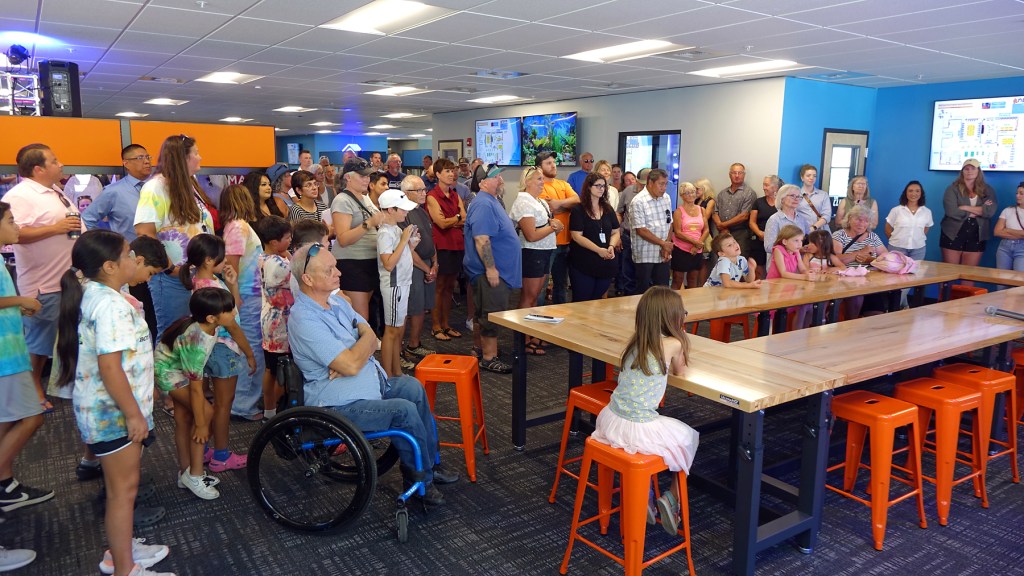
A group of children sat at the table watching the program

Numerous luminaries were on hand to celebrate what has been a long process for Chelan to the current space that will help local youth and teens reach their full potential.

Mayor McCardle’s opening statement was that boy’s and girl’s clubs were really personal for her having been involved with one growing up. “I’m very excited to see this as a part of our community,” she said.
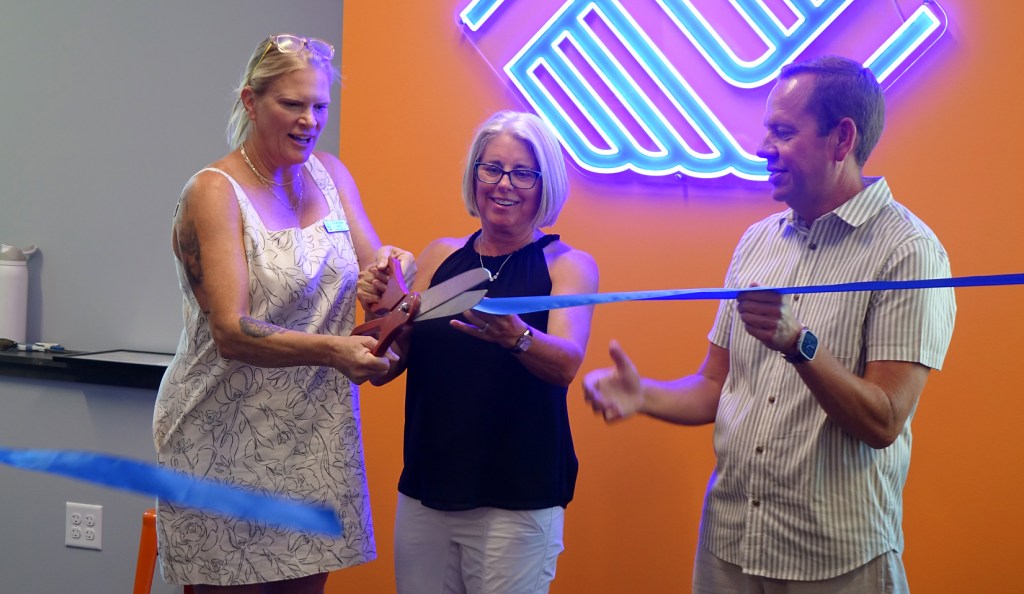
Mayor Erin McCardle cut the ribbon with the help of Brooke Issak and Michael Steele.

McCardle explained that the city started the process of collaboration with the Boys and Girls Club in March of 2024. Brooke Issac, chairman of the Community Center board stated that it took partnerships to make this come together and create a hub that will benefit quality of life in the Lake Chelan Valley. She thanked Maribel Cruz for all of her work. “There are so many things she has done we don’t know about.” Cruz is the center’s director.

The Club is the 27th in the state and according to executive director Bill Tsoukalas, the Chelan facility fills a gap in the current system. Brewster has had a club for 10 years and there are three located on the Colville Confederated Tribe lands. The Spokane Tribe also has one.

“We can’t do this alone,” stated Tsoukalas. He introduced the Unit’s Director, Angela Collins who has worked hard behind the scenes as the club came together. It has operated since last October with a successful youth basketball program.

Collins admitted that she initially felt a bit of hesitancy taking on the job, but is now fully committed to the task. She introduced her staff to the crowd.

Tsoukalas, who has been at the helm of Washington’s Boys and Girls Clubs said, “We are looking at Chelan for a long-time partnership. It’s a great place to be. The support of this has been overwhelming. I’m so excited.”

According to Collins, Monday’s Grand Opening served as a soft opening of the spectacular facility. It will begin accepting walk-in child care for children from the first grade through sixth grade.

They are also working on three weeks of camps in August.

During the school year, the club will provide child care before and after school with programs beginning at 6 a.m and ending at 6 p.m.

If you haven’t had a chance to visit, check it out.

Is your home defensible against wildfire… Ruby Theater program outlines the areas fire assets

by Richard Uhlhorn

The Ruby Theater held its second presentation on Fire in the Valley featuring Chelan Fire and Rescue Fire Chief Brandon Asher and Fire Commissioner Mark Donnell. This event took place on Thursday evening, May 1 to a crowd estimated at 50 interested residents.

Chief Asher described Chelan Fire and Rescue’s mission that includes responding to structural fires and wildfire incidents in a district that is 125 sq. miles. In addition, the district responds to all EMS calls, automobile accidents including victim extraction, water rescue on the lake, Regional rope rescues and Hazmat situations.

Chief Brandon Asher and Fire Commissioner Mark Donnell presented fire information at the Ruby Theater on May 1.

The district has just hired two new career firefighters to fill out its needs for all situations. It also carries up to 35 volunteers and is always looking to attract more. The largest percentage of volunteers are over the age of 60. While there are a number of younger volunteers Asher said, “It’s hard to attract younger men and women who have jobs and are unable to respond to calls.”

The district responds to more wildfire than it does structural incidents, but its firefighters are trained in both types of firefighting techniques.

Wildfire is the most worrisome event that visits the valley each year. It is rare that the Lake Chelan Valley escapes having a wildfire during the fire season with the exception of small brush fires that are contained quickly.

Asher described the downtown fire siren as a method of letting people know that a second alarm fire or incident is ongoing. “When it goes off, step outside and look around,” said Asher. “We also try to inform the public through KOZI Radio and social media.”

Fire Commissioner Mark Donnell moved to the Valley in 2015 as a retired westside paramedic and firefighter. He quickly signed up as a volunteer and eventually ascended to the position of Fire Chief before retiring.

Donnell presented his story as a Union Valley resident. He shared photos of his Union Valley home prior to preparing it for a wildfire incident to a photo of the work he has accomplished to save it in a wildfire event.

A fire plane dumps water on a section of wildfire in Union Valley in 2022.

In September, 2022, a wildfire started adjacent to the Union Valley road just below his residence. This fire was human caused, probably by a spark from a trailer hitch safety chain dragging on the ground.

Chelan Fire and Rescue’s initial attach crew responded quickly which helped with control, but command was handed over to the Department of Natural Resources (DNR). At the time, Asher reported that a unified command was set up quickly. “We had good response on this fire.”

Donnell along with many other residents living in this fire prone area have taken advantage of a program offered by the DNR to make their property defensible.

It wasn’t always like that. Prior to any real defensible space being created in Union Valley a resident in summer of 2001 started a trash burn on his property which got away and ended up burning 46,000 acres on Union Valley.

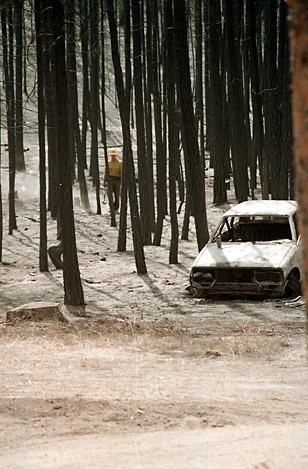
A fire investigator inspects damage left by the 46,000 acre 2001 human cause fire.

The DNR and residents began working on defensible space and are still at it.

The most recent and devasting fire in the Valley began in 2015, burning 56,000 acres of land before it was contained. This wildfire began as a lightning strike on Chelan Butte. Eventually an afternoon wind picked it up and it roared through the south end of Chelan causing millions in damage to homes and fruit warehouses.

Wildfire has a long history in the Lake Chelan Valley. Most of the lakeshore has been engulfed over the years and many thousands of acres have been consumed.

Last year’s Pioneer Fire was just the latest in a series of large wildfires at a cost of millions to the taxpayer. The Pioneer Fire has been reported to have cost $100 million plus to contain.

The August 1970 lightning fire in the Entiat and Chelan Mountains burned a total of 122,000 acres. This fire can be seen in a documentary narrated by Loren Green, as detailed by HistoryLink.org and YouTube. Chelan residents had to evacuate and were sheltered in an evacuation center, but returned the next day to scenes of devastation. 

In 1994, the Tyee Complex, another lightning fire that began in the Entiat drainage burned over 135,000 acres and forced evacuations of resident on the south side of Chelan.

As more and more people move to the area and build homes in the wildland/urban interface, constructing defensible space is an important part of building here. The following link will help you negotiate the ins and outs of working with the DNR.

Defensible Space – Prepare Your Home | WA – DNR

Agritourism is probably dead in Chelan… not the valley!

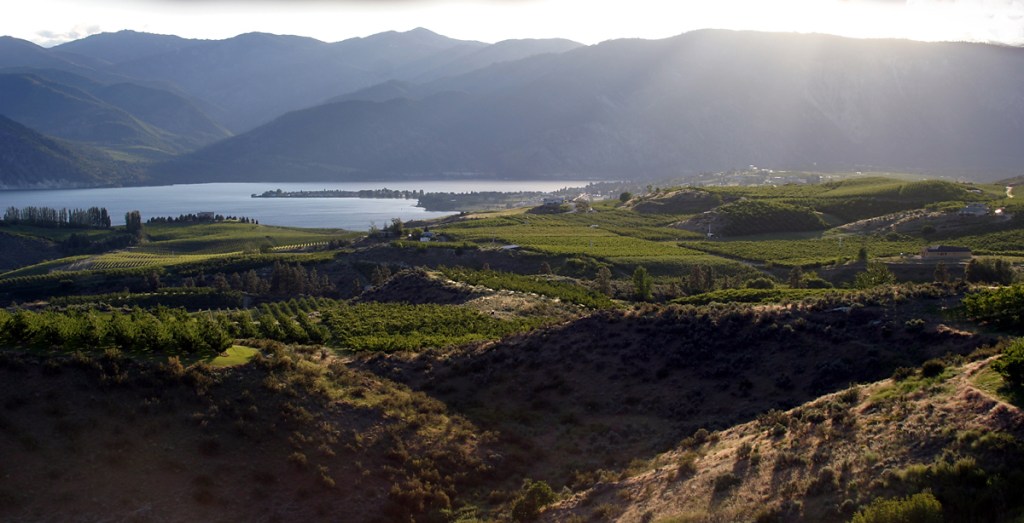
The rolling hills of the Lake Chelan Valley used to be full of apple orchards. Today, as growers fail due to increasing growing costs, regulations and other forces, the orchards are taken out and replaced with subdivisions, vineyards and wineries.

by Richard Uhlhorn

AGRITOURISM
“The apple industry has been in trouble in the Lake Chelan Valley for the past several years,” said real estate broker, Bob Knauss of New Horizon’s Real Estate. “The problem is that everyone is getting a paycheck except for the grower.”

Several growers in the Manson Project that I’ve talked to have either received a bill from their warehouse or just haven’t made any money from their crops over the past several years.

All of this can be attributed to rising labor costs, declining returns on investment, more regulations like overtime requirement for ag. workers, and a declining environment for small scale operations.

This raises the obvious question; Is farming, as in growing apples, sustainable in the Lake Chelan Valley and can agritourism be the savoir of what remains of what once was one of the World’s best apple growing regions? The answer is probably not!

paid advertisement

The City of Chelan has been struggling to update its Agritourism Code to allow growers to remain in business.

The entire subject of Chelan’s agritourism code came up when developer Tim McDonald’s Bluewater Terrace application to develop 20 homestays, an event center and winery with production facilities on family property utilizing the City’s current agritourism code.

McDonald, who claims that he was led to believe over the past seven years that his application would be approved had the rug pulled out from under him when the Chelan County Hearing Examiner ruled that his 20-homestay proposal on his application would not be allowed, but that he would be allowed to construct his winery and event center.

The proposed 20 homestay units was the monetary grease that would allow McDonald to move forward with the project. However, the old orchard land which was annexed into the City as a potential residential subdivision has no current agriculture on it. McDonald wanted to plant five acres of grapes to meet the agritourism code.

In meetings that has included the public, Planning Commission and City Council, John Ajax, current Community Development Director, has been seeking input to help rewrite the agritourism code in hopes of retaining agriculture in the City.

The input has not been helpful. Having discussed the issue with several old orchardists, one current grower, a Planning Commissioner, a past City Councilmember and John Ajax, himself, a code change allowing a more agreeable code to help preserve orchards is probably a non-starter to helping preserve small orchard plots, particularly when the land, according to Olson is much more valuable as real estate.

The retired growers, Mark Gores and Harold Schell, both stated that it costs upwards of $250+ per bin of apples delivered to a warehouse. If the variety being delivered is not making money, the grower comes away from a year of expenses without anything in his/her pocket.

The reality is that within the confines of the City and UGA, there are only 300 acres of orchard left and depending on what variety the grower is producing, these orchards may disappear in favor of the real estate value of the land.

Regardless of what the Planning Department does, they have until the Comprehensive Plan update to consider killing it, writing a new code for agritourism, or just leaving the current code alone.