Lake Chelan Collaborative holds public meeting to watershed plan

LAKE CHELAN
by Richard Uhlhorn

Lake Chelan is 55 miles long reaching into the North Cascades. A new restoration plan is being developed by a group of stakeholders. The public is encouraged to join in at their quarterly meetings held at the Chelan Fire House.
Public involvement is important to keeping Lake Chelan pristine.

On Wednesday, April 3, after a long day of meetings with stakeholders, the Lake Chelan Collaborative and Chelan County Natural Resources held a public meeting at the Lake Chelan Community Center to introduce the ongoing work that is being done to produce a new Lake Chelan Watershed Restoration Plan.

The last plan was developed in 2012 and the new plan is being developed to upgrade the old plan to improve the health of a watershed that is clearly under pressure from a variety of sources.

History:
Lake Chelan, known for its pristine condition, is 55 (some say 50) miles long and the third deepest lake in the United States behind Crater Lake and Lake Tahoe.

As a reservoir controlled by Chelan County Public Utilities District (PUD), the lake provides power generation, recreational opportunities, agriculture irrigation, potable water, fisheries, wildlife and wildlife habitat, and historic and cultural preservation.

The planning unit for the new restoration plan are Chelan County, City of Chelan, Lake Chelan Reclamation District, WA. State Department of Ecology, Washington State Department of Fish and Wildlife, Washington State Department of Health, Department of Natural Resources, U.S. Army Corps of Engineers, U.S. Forest Service and a group of dedicated and interested individuals.

Over the course of meetings, the Lake Chelan Cooperative developed 59 watershed issues that’s been distilled down to 19 categories. They are: Aquatic Invasive Species, Nutrient Loading, Water Supply issues, Fish Habitat Restoration & Fishery Management, Forestry Management, Wildfire Prevention, Recreational Impacts, Recreational Access, Micro Plastics and Emerging Toxic issues, Lake Dynamics, Roses Lake Algae Bloom, Water Foul and Pathogens, Cultural issues, and Irrigation Considerations.

Chelan PUD dedicated 65,000 acre feet for use in 1992, which is now down to 5,000 acre feet. It is anticipated that the entire remaining reserve will be allocated during the current water right allocations which will leave some applications dead in the water (no pun intended).

AIS primary issue:
The collaborative has determined that the threat of aquatic invasive species introduction is at the forefront of other issues.

The introduction of golden mussels to the equation of quagga or zebra mussels being introduced to Washington State waters is the highest priority of the Washington State Department of Fish & Wildlife.

So far these mussels have been stopped at our borders, but that doesn’t mean that a vessel carrying them couldn’t make it to Lake Chelan. Last week, Lake Tahoe stopped a boat loaded with golden mussels. Oregon has also found them on a boat.

Lake Chelan will be conducting volunteer boat inspections this year with the county’s inspection team roving between all five boat launches with special attention at Old Mill Bay where most boat launches take place.

The collaborative continues to seek funding to have mandatory boat inspections take place on Lake Chelan.

If any of these invasive mussels were able to enter the lake, removal could cost millions as they attach to any hard surface and clog up intakes. Chelan County PUD should be taking extreme care to stop any invasion of these mussels into the Columbia River system. The of an infestation of mussels in their dams.

Next Steps:
The collaborative next steps is to initiate public outreach, share information and identify data papers and identify funding opportunities for priority projects. The Lake Chelan Collaborative meetings are public and take place at Chelan Fire & Rescues Fire Station.

The September meeting’s agenda will cover Fish Habitat Restoration and the State of Fisheries Management on Lake Chelan. This is a topic of interest to many in the community.
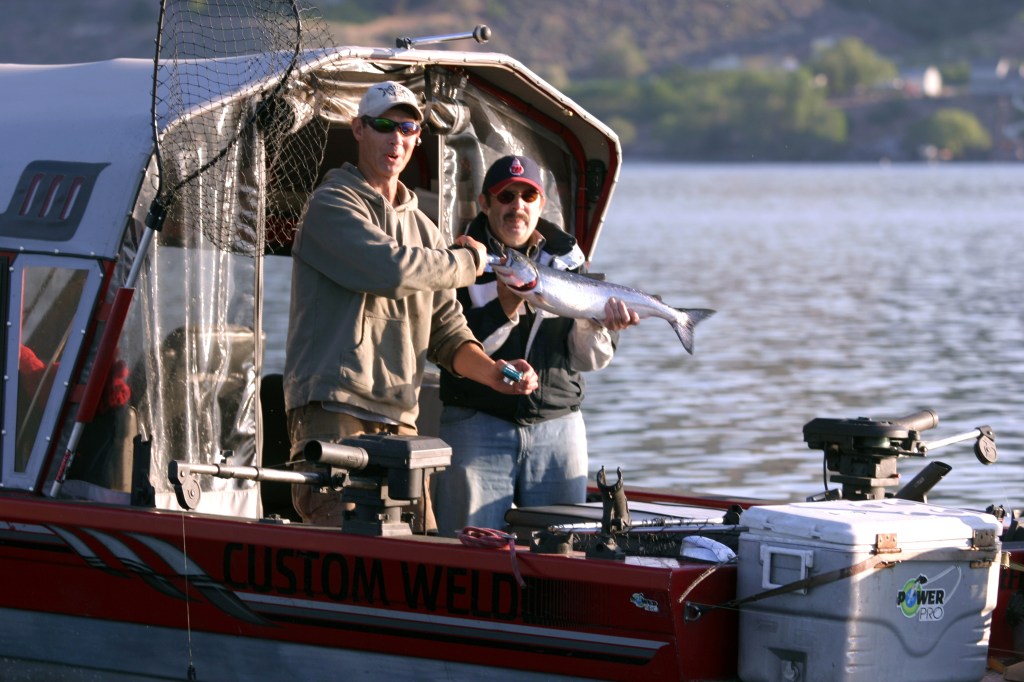
A fishing guide on Lake Chelan and his client show off a Chinook (King – Oncorhynchus tshawytscha) salmon caught in the lower basin. This fish weighed in at approximately 7 pounds.

The lake is/or was the home for the following native species… Bull Trout (now considered extinct), West Slope Cutthroat Trout, and Burbot (Freshwater ling cod).

Over the years, the following species have been introduced, either legally or not. Chinook salmon (there is a robust fishery now), Kokanee salmon (another robust fishery), Rainbow trout, Lake trout and Eastern Brook trout.
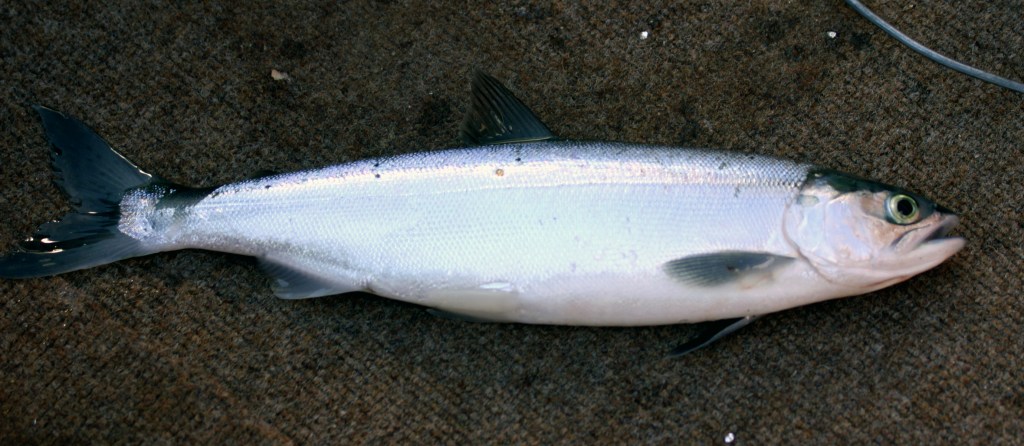
A portrait of a land locked sockeye (Kokanee) salmon caught in Lake Chelan. The Silver fishery is extremely strong in the lake during the early spring months.

Each spring, runoff from the tributaries to the lake block off access to spawning fish and need to be cleared.

There is a proposal to reintroduce Bull trout to the Lake Chelan tributaries which has caused a lot of consternation amongst recreational fishermen and professional fishing guides. Their message is that a Bull trout reintroduction could result in collapsing a healthy recreational fishery if the species was able to migrate to the lake. Bull trout are considered the “Wolf of the Trout family.”

Also on the agenda is a discussion of the dwindling water supply for those seeking water rights. This will include a discussion on the county’s reimbursement program.

A discussion will be held on an Algae Monitoring Program also.

Future meetings will include topics like AIS management, Forestry management, Wildfire Prevention, Recreation and its impact, Water Quality and Agriculture issues.
City workshop provides information on TBD, Comp. Plan and Parks financial issues

by Richard Uhlhorn

Transportation Benefit District revenue use:
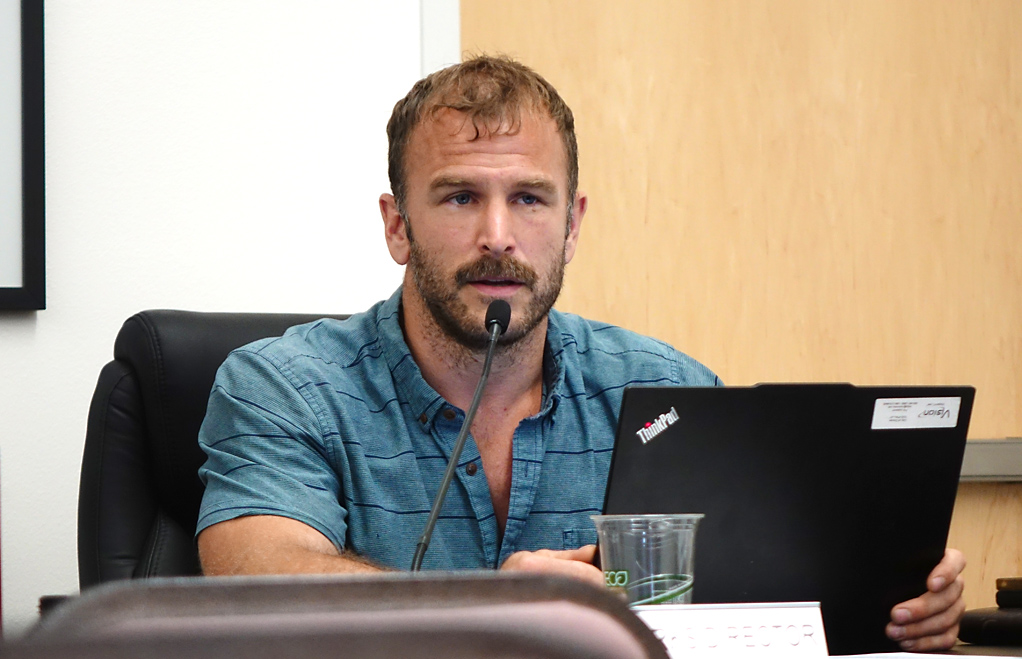
“We are fortunate,” Jake Youngren, public works director, told the council at its Tuesday, August 5, workshop. His comment relates to the Transportation Benefit District that will allow the Public Works Department re-structure how they address capital projects.

Public Works Director Jake Youngren presented a draft framework for allocating close to one million dollars from next year’s Transportation Benefit District to City Council and staff at the city’s August 5 workshop.

Youngren presented a draft framework for allocating TBD revenues to align with the department’s six-year Transportation Plan. Youngren told council that the draft allocations were to get the department’s recommendations to them. “We want to leverage that money,” Youngren said. “If you don’t take care of what you have, you are going to be spending a lot of money.”

Councilman Tim Hollingsworth asked how much revenue the department already receives from property tax. Youngren replied that it was 75% of property tax revenues.

Youngren wants his draft allocation framework to be a starting point for discussion. Hollingsworth replied that the city needs to prioritize how that funding is used. TBD revenues can only be allocated within the TBD district.

In his draft document Youngren allocated 30-40% of revenues towards Preservation projects like routine maintenance, street overlays, and chip seals. The next highest allocation would be towards Self-funded critical projects without any external sources.

Fifteen to 20% would be allocated to be used as a local match for competitive grants. Five to 10% would be saved as a contingency fund for emergency expenditures or short term debt issuance and another 5-10% would be used to prepare shovel ready projects.

With the TBD Revenue Allocation draft in the hands of the Council to study, a future meeting will be held to discuss these allocations.

2026 Comprehensive Plan update:
Community Development Director John Ajax gave an update on the state required comprehensive plan update.

Elements being addressed this year include:

  • Land Use – According to recent calculations Chelan’s Urban Growth Area will grow by 500 to 2,500 people over the next 20 years.
    The Land Use element will take into account population growth, housing capacity and zoning consistency. Zoning implements the comprehensive plan by organizing growth throughout the city and county. “We will look at how growth in Manson and the South Shore impact our UGA,” said Ajax.
  • Housing – The comp. plan will identify current and projected housing needs. The Housing Element will update Chelan’s housing needs assessment. This element will provide goals and policies for affordable housing, housing types, and density.
  • Transportation – This element will outline transportation infrastructure needs including multi-modal transportation, which includes pedestrian, bicycle and other forms of alternative transportation.
    One of the largest changes in Chelan’s multi-modal transportation is the advent of electric scooters, one-wheels and electric bicycles This will lead to new standards and the development of future routes.
  • Capital Facilities/Utilities – With a Water and Sewer Comprehensive Plan already in place, documentation of 20 year capital facilities needs during the upcoming budget process.
  • Climate Resilience – With climate change already affecting the area with extreme weather, this element will create climate goals and policies.
  • Parks & Recreation – This element’s purpose is to establish a vision, goals, and strategies for providing high quality parks, open spaces, recreational facilities, and programs that enhance the quality of life for Chelan residents and visitors.
    in the comp. plan?” Ajax replied that this year’s comp. plan is a major undertaking. “Any suggestions you have are appreciated.”

A Public Hearing on the update will be held in September and the Council will move to adopt the plan on December 8, 2025.

Parks and Recreation Ad Hoc committee update:
Chelan’s Park System is the only known park system in the state that is not funded by a tax levy. It is self-funded through its enterprise system that includes the golf course, RV park, City Marina, and putting course.

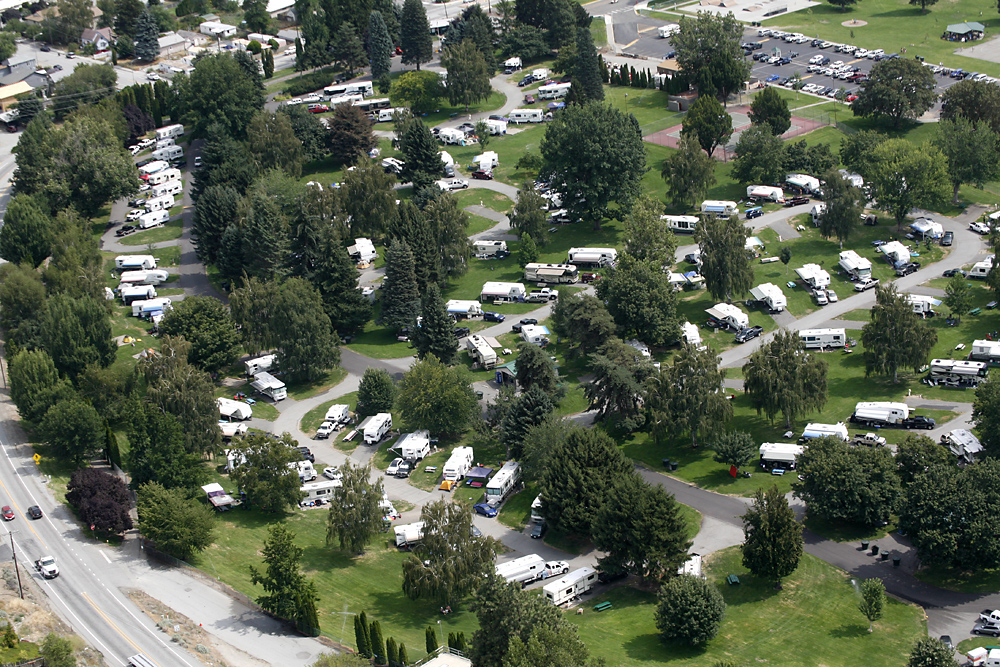
Chelan’s Lakeshore RV Park is just one of the park systems revenue generators.

An Ad-Hoc committee was set up to develop three to five items to help the park with sustainable funding for park operations and capital investments for 2026 to 2030. The current business model is not sustainable.

Currently, all of the parks enterprises with the exception of the golf course, are making money. The golf course is breaking even. “I think the golf course is the difficult one,” said Hollingsworth.

Finance Director Jackie Tupling remarked that the solution to the golf course issue might be turning it over to a management company. “I see a lot of opportunities,” she said. Bob Goedde remarked that there may be no money in golf, it is still a valuable property and amenity for the community.

Horne said he needs a little more guidance. Brad Chitty brought up the Lodging Tax money. Under new guidelines, lodging tax funds can be used for tourist related projects. “That tourist money being locked up and not being able to move it around is an issue.”

Hollingsworth remarked that the course’s irrigation system needs to be upgraded. “The original plan was to update the irrigation system. What’s the best way for us to maintain a quality golf course… other management, what are the limits of what you are asking?”

Tupling replied that the department needs a long-term solution for the entire parks system. Hollingsworth replied that the council needs to keep an open mind on potential solutions.

“Are Pocket Parks still a priority,” asked Horne. Hollingsworth feels that pocket parks should not be tabled because the residents want water access. The Lakeshore Trail (under construction) will disperse people to water access points and there are some opportunities along that corridor for more water access opportunities.

Current park operations and downtown services are being supported through a combination of public tax dollars and generated revenues of its parking fees and concessions.

One of the other potential solutions is the establishment of a dedicated capital fund for which there is no dedicated source of funds to establish it.

Goedde remarked that one solution could be a park tax levy. Hollinsworth replied that lodging tax revenues are a pretty reliable source of money.

Mayor McCardle remarked at the end of the meeting from ZOOM that the meeting was productive.

With the current park business model not sustainable, alternatives need to be developed and presented to the council before the budget season. Parks Director Paul Horne asked if the council would support a refined financial structure for its current enterprises.

City Council to discuss AI and funding for Boys and Girls Club

by Richard Uhlhorn

Artificial Intelligence:
“Our priority is getting more engagement from the Community,” said Mayor McCardle. “This platform will make it easier to go out to the community.”

She introduced the representative from Fulcrum Management Solutions who made a presentation to the Council and staff at last week’s workshop meeting on an AI engagement and research platform called the ThoughtExchange.

The Artificial Intelligence (AI) platform will supposedly help the City engage with its residents in a more meaningful way through its data driven open ended survey capabilities. “It is more solution based on what’s working and what’s not working,” said the representative Jasmine.

Councilman Bob Goedde mentioned that many residents in Chelan are older and don’t have the necessary smart phones or computers to engage. “I don’t have a smart phone,” remarked Goedde.

McCardle told the Council that there are many AI applications the City could use. “We would own it, but it comes with an account manager,” said McCardle during a telephone conversation.

The $25,000 cost would be split between each department.

It will be discussed at this Tuesday evening’s Council meeting but no decision will be made at this point.

American Rescue Plan Act Funds:
The City has $233,000 ARPA funds remaining to be spent by the end of the year. These funds were allocated to the Anderson Road Project, but the Council was informed by City Administrator Wade Farris that the City was approached by the Chelan Community Center about supporting the Boys ;

Maribel Cruz, executive director, told the Council and staff at the June 4 workshop that the Lake Chelan Community Center has secured a partnership with the Boys and Girls Club to provide 10,000 sq. ft of space at the Center.

She provided a game plan for school age kids to use the space as a fun and safe place.

According to Mayor McCardle, the remaining ARPA funds would be used by the Boys and Girls Club for tangible items like computers etc. The City is also considering entering into a 15 year lease of the space at a cost of approximately $16,000 per year for the maintenance and operations.

PUD Park Prioritization:
The Council was also given a list of Riverwalk Park improvements that the HDCA (Historic Downtown Chelan Association) would like to see. The improvements they would like the City to consider includes:

  • Making the pavilion more usable year-round;
  • Make power more accessible throughout the upper areas of the park;
  • Improve the restrooms;
  • Improve the picnic shelter area
  • Add some interactive sculptures or waer features in the upper park area; and
  • Provide public restrooms on the south side of the park across the river from the Chelan side.

These improvements would require some City funding, but since Riverwalk Park is a PUD Park, it would make sense to enter into a collaborative effort to undertake some of the improvements suggested by the HCDA.

In other business:
The Waterfront Advocacy Group consisting of Art Campbell, Ron Foster and Greg Petersen, proposed an expansion of dock space in Riverwalk Park near the pavilion. The group expressed a need for a more expansive lakefront access to the downtown area.

This proposal is a moderate 40 t0 60 foot extension to the existing PUD dock beside the original bridge which could be designed to minimize any obstruction to the main Chelan River passing under the bridge. The group would also like to see a floating day use dock and access ramp installed just west of the pavilion.

These issues will be discussed at the Tuesday, June 11 City Council meeting which begins at 6 p.m. The public is encouraged to attend. Comments can be made by the public at the beginning of the meeting, or if it is an agenda item, made at that time.

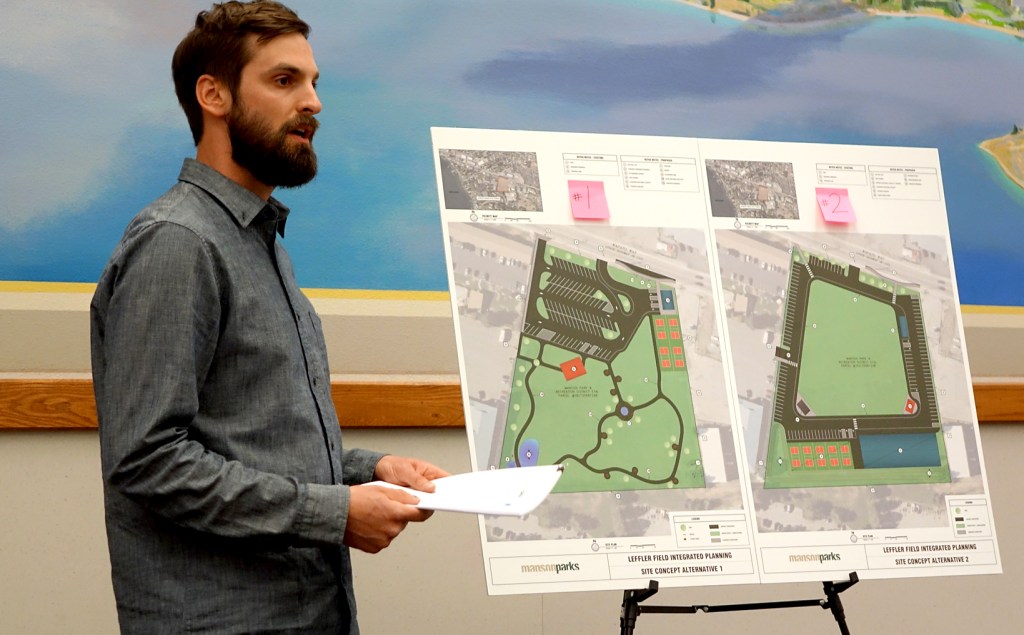
Manson Parks and School District gather input for developing Leffler Field

By Richard Uhlhorn

Manson Parks and Manson School District held a public meeting on Monday, May 13, in Manson’s Elementary School Library to gather input towards determining the top project priorities for Leffler Field. The Parks department and school district are joint owners of the property.

Robin Pittman

There were approximately 20 people in attendance.

In 2021 the Parks District received a State $574,000 and is working with the School District to better position themselves to get more grants. “We want the best use for our community,” said Parks Director Robin Pittman.

In 2022, they received an Ecology grant  for $200,000 to remedy the lead/arsenic in the soils on the old orchard land. “We are held responsible for public use and want to make sure the soil is healthy.”

Eric Maise, an engineer with Aspect Consulting stated that they conducted a sampling of the property and found that the lead/arsenic contamination of the soil extended on average down to four feet.

Eric Maise, Project Engineer with Aspect Consulting

Using the Ecology cookbook, there are four remedies available including:

  • Total Excavation – “This is very expensive.”
  • Soil mixing – “This is a potential solution.”
  • Consolidation and Capping – This the proposed remedy using Ecology guidelines where a barrier fabric would be laid down with 6 inches of clean material covering the ground in non-used areas and 12 inches of material covering the playground and ballfields. That will keep the costs down and address human health issues. “That is a snapshot of the environmental steps,” said Maise.

Pittman said that mailers will be mailed out to every resident in Manson asking what everyone wants to see. “There is no timeline or funding right now. We will be applying for grants,” said Pittman.

Ryan Browniee, a civil engineer with Pacific Engineering said, “It’s (lead/arsenic remedy) not something we have funding for. It is a long term project.”

Approximately 20 residents attended the meeting.

The overall plan for Leffler Field is a LINK Park and Ride with parking and a year-round restroom. In addition the school district and parks department are planning, based on the community’s input the following amenities have been proposed:

  • Pickleball courts
  • Playground
  • Community Garden
  • Outdoor Exercise Equipment
  • Open Green Space
  • Volleyball courts and
  • Year-round restrooms

Doug England asked how the area would be monitored? Pittman replied that there have been no discussions on that issue yet, but added that in the summertime months there would be “big time security.”

The primary priority now is to find funding to move ahead with the community’s desired outcome.