Phyllis Gleasman takes over chairmanship of the Hospital Board

allthingslakechelan banner ad-hospital x 1200

By Richard Uhlhorn

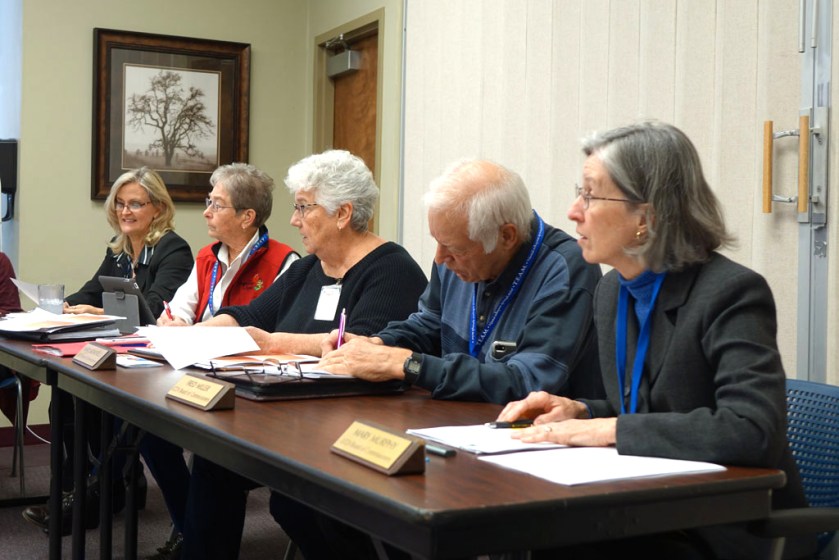
The Lake Chelan Community Hospital held its regularly scheduled commission meeting on Tuesday afternoon, January 22, in the hospital board room.

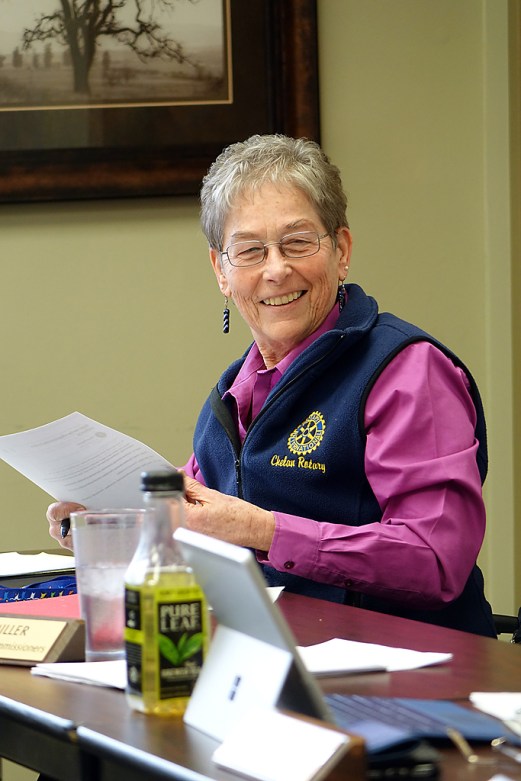
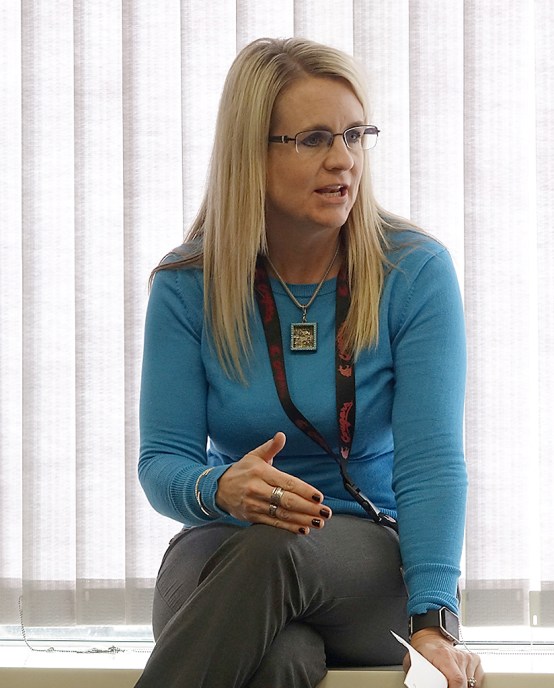
On the agenda was a changing of the guard with Mary Signorelli stepping down and Phyllis Gleasman taking the helm as chairman of the board.dsc05865-phyliss gleasman

Phyllis Gleasman accepted the position of Chairman for 2019 on the Lake Chelan Community Hospital Board of Commissioners.

Signorelli stated that her tenure was a labor of love and said, “I’ve learned an awful lot and am grateful for the opportunity and challenges.”

dsc05862-mary signorelli

Mary Signorelli told the board that her tenure as Chairman has been a Labor of Love and that she was grateful for the opportunity.

Mary Murphy was nominated and elected as the new Vice Chairman and Fred Miller took over the position of Secretary.

Committee assignments are as follows:
Mary Signorelli – Facilities and Community Outreach
Phyllis Gleasman – Facilities and Affiliations
Fred Miller – Finance and Retirement Plans
Mary Murphy – Affiliation and Quality Care
Jordana LaPorte – Finance and Community Outreach.

Finance Director Vickie Bodie and CEO Steve Patonai gave a financial report that included a Year-to-Date report that had the hospital operating on a net revenue of $26,762,211 with a net income of ($198,000). Of concern to the board is the Debt and Charity Care balance that was reported to be $2,114,000 for 2018, up from 2017 at $1,715,000.

dsc05881-vickie bodie

Finance Director Vickie Bodie explained that the hospital has to accept all patients in the Emergency Room regardless of their status.

Signorelli asked if a lot of these patients who are not paying are repeat patients. Bodie replied, “They know they can come to the ER (Emergency Room) and they will not be denied.”

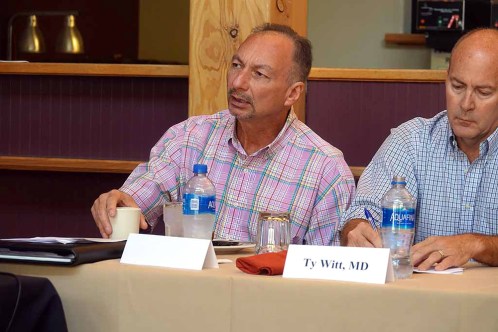
Dr. Ty Witt asked if those monies were uncollectible or “does some of that come back to us.” Bodie replied that some comes back after it goes to collection because it affects a person’s credit score. Signorelli asked if there was a line item for recovery and Bodie replied that there was.

Gleasman asked if these patients who are not paying could be put on a watch list and Patonai replied that there was nothing that the hospital can do.

“The Health Industry is a tough industry right now,” said Patonai “We are being hammered.”

The board approved a business plan at its retreat and Patonai stated that he will give an update on that plan at next month’s meeting. “I will give an update on each pillar of where we are at achieving our goals.”

Brad Hankins, Clinic Director stated that the Clinic has moved to 100 percent electronic billing. He also stated that the Clinic is working with a focused population dealing with chronic pain. “The diabetes program is up and running,” he said. He also told the board that the ACH payment processing has reached 99 percent at the Clinic. “Some of this stuff has happened over the course of January,” said Hankins. “It is the result of a lot of hard work over the past months by a lot of people.”

dsc05891

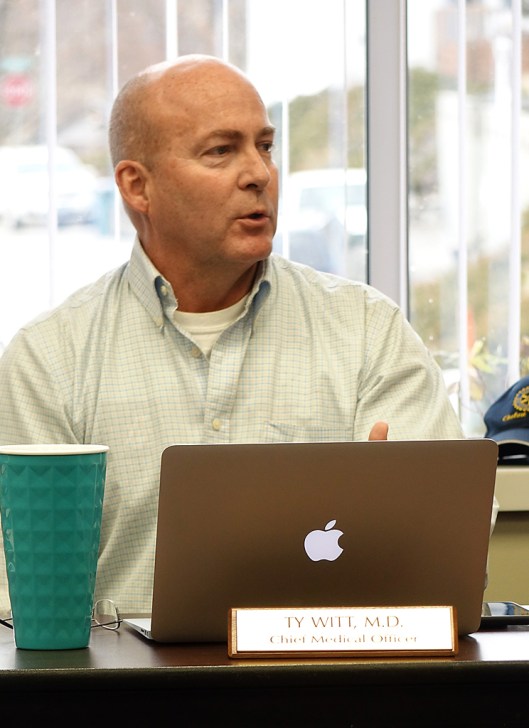
Dr. Ty Witt resigned as of February 1 as the Hospital’s Chief Medical Officer, but will remain on staff as a physician.

Dr. Witt announced his resignation as the Hospital’s Chief Medical Officer at the end of January. “I’ll still be here working as a doctor,” he stated. He added that there is no replacement yet.

One other concern brought up by Mary Murphy and Jordana LaPorte was the status of the new hospital. They were told it is still in the planning phase. “We’ve met with the architects,” said Patonai. The challenge is to somehow fit the clinic into the original footprint. Murphy said, “It would be really helpful as a board member to understand what is going on.” Patonai replied that two board members are on the facilities committee and will be coming back to the full board with recommendations.

dsc05867

CEO Steve Patonai explained the process going forward with the architects on the new hospital plan to the board and that the Facilities Committee would be giving a full report on that process soon.

Patonai said during his CEO report that it is important to the community that the hospital/clinic strive for high standards.

dsc05879

Fire agencies discuss need for rescue boat

RECENT POSTS

by Richard Uhlhorn

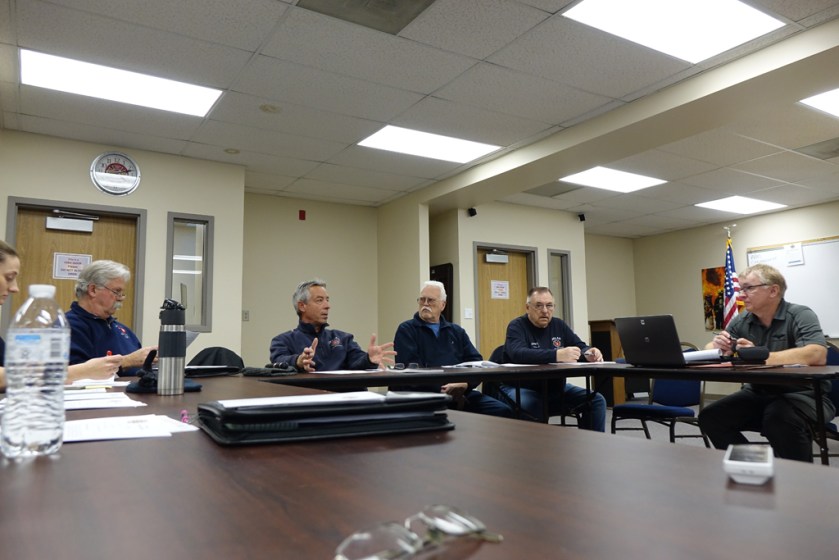
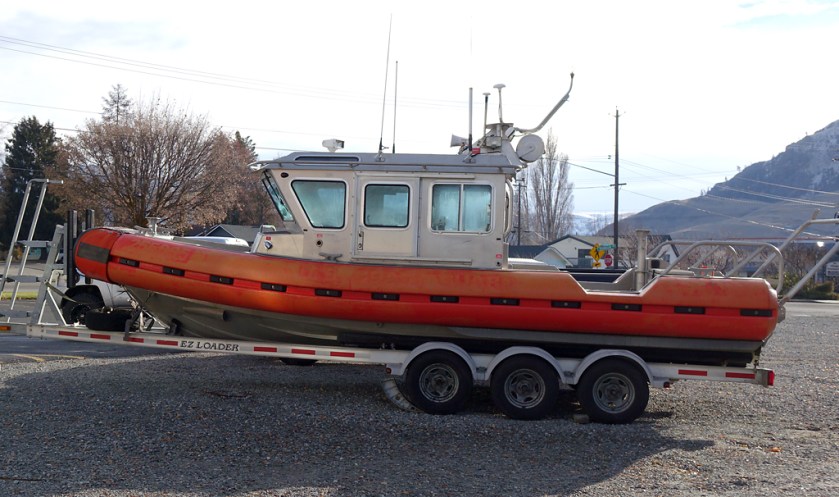
Last Monday, January 7, Chelan Fire Commission Chair, Russ Jones, invited a group of individuals and agency representatives together to find out what their interest might be in Chelan Fire and Rescue’s (CFR) new, but not paid for, acquisition… a 25 foot Defender that Jones and others hope to put into service on Lake Chelan as a rescue swimmer platform and potential fire boat.

dsc04874 defender

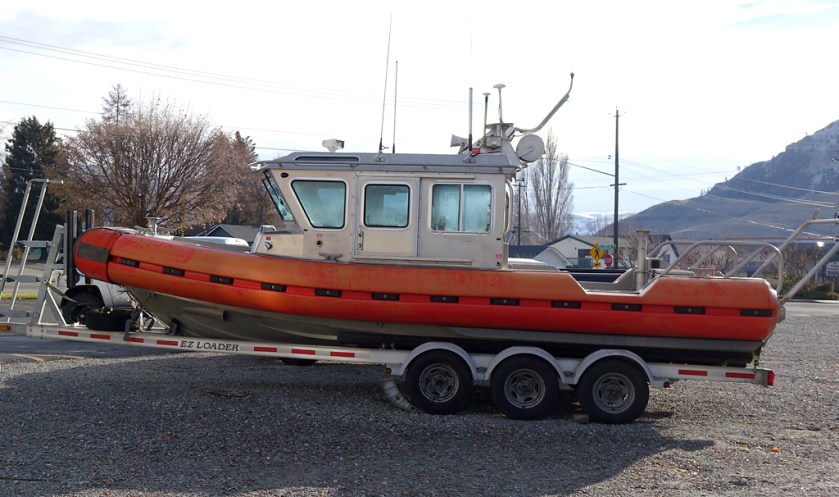
This Defender Class boat can be purchased for $5,500 and made operational for Chelan Fire and Rescue. It would primarily be a vessel to transport the District Rescue Swimmers when needed on the Lake.

The boat is a Coast Guard surplus vessel that Jones found for $5,500. The Defender class boat, also called a Response boat was introduced in 2002 by the U.S. Coast Guard and as such, serves a variety of missions including search and rescue, law enforcement and fire fighting.

dsc05767

dsc05768

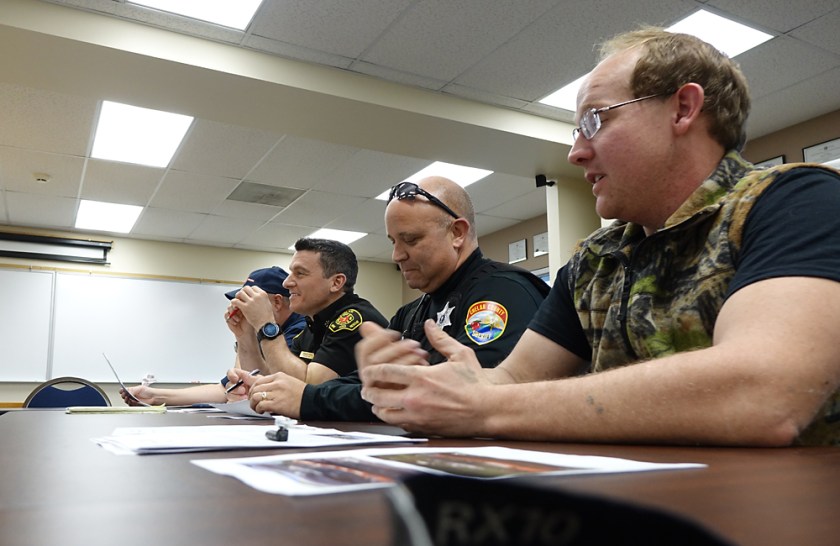
A number of agency representatives joined Commissioner Russ Jones to discuss the interest in purchasing and putting into the District’s tool bag for on-water rescue and other operations if needed.

The design length of the hull is 25 feet and is normally powered by twin 225 horsepower outboards and are capable of speeds in excess of 46 knots. It can carry up to 10 individuals and is trailerable.

The deal is that if CFR purchases the boat, it must make it operational within 12 months and keep it for 18 months under the auspices of the District.

dsc05772

Firefighters and Agency Representatives got their first look at the Defender after the Monday meeting. 

Jones put together an estimate to make the boat fully operational. He has found two 225 hp outboards at $4,000 each or $8,000 with only 200 hours on them. Installation would cost another $1,000. Batteries would add $567 to the total and a Fire Department radio would cost $1,615.

The vessel comes with full electronics including radar. Total cost to make the vessel operational would be approximately $17,800.00.

Annual operating costs are estimated at $3,970. “We have been offered maintenance by a local marine shop,” said Jones. In addition, Sunset Marina has offered dock space for the boat.

Most of those attending the meeting were positive about CFR acquiring and putting the vessel to work. Chief Asher (CFR) said, “In the long term the versatility it gives us is pretty hard to pass up.”

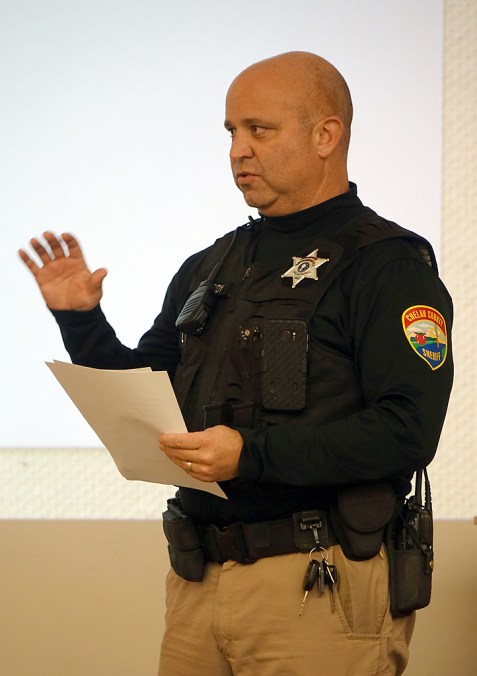
Chelan County Sheriff’s Marine Patrol representative said he was on hand to find out what the District wanted to do and to go from there. “We want some insight into whatever it is you want to accomplish,” said Moody.

The Chelan County Sheriff’s Department has the responsibility to patrol the waters of Chelan County including Lake Chelan for the purpose of preventing crime and enforcing the law. Currently the department has 10 Marine Patrol Volunteers that help during the busy boating season.

“I think a boat is a good investment because in the summertime we have tourists … incidents we can’t get to,” said Cody Evans. He is a volunteer rescue swimmer and SCUBA diver. “I think it is a good investment for Chelan Fire and Rescue.”

Chelan County Fire District 5 Chief, Arnold Baker said, “We need capabilities for rescue. Yes, I like it, but don’t set your expectations too high. Set your goals and cooperate. I’m very interested.”

Douglas County Fire District Chief Jim Oatey stated that he is very interested at what’s going on, but added that river rescue is way different. “By the time we get there, it is all played out. When things go bad on the river they go really bad fast.”

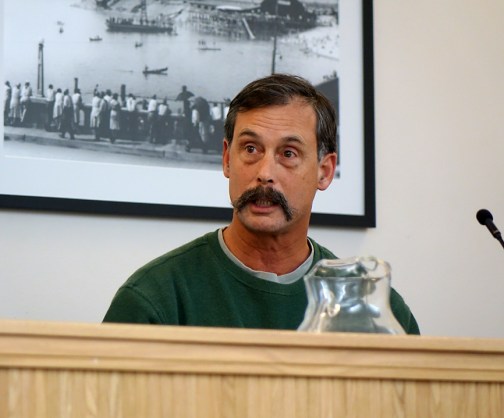
Volunteer firefighter Robert Taegu said he was interested in a support role on the boat. His only concern is that it can’t make it under the old Woodin Avenue Bridge during high water.”Maybe it could be modified, but having a boat on the water ready to go in the only way to do it. It is important to be able to get out there without having to launch it.”

Volunteer Cynthia Raines is also interested in a support role on the vessel. “Having high rescue capabilities is pretty important. Accidents are going up.”

Chief Tim Lemon put together a Memo sheet for information for the group which also included on water incidents from 2005 to 2018. Most incidents involved personal watercraft accidents, drowning incidents and near drowning incidents.

One of his bigger concerns, based on other incidents around the state, is the potential for a Marina fire. Lemon wrote that there are no agencies on Lake Chelan set up or equipped to fight a marina fire from the lake.

Lemon listed a number of operational considerations for the boat include:

  • A response for drowning situations;
  • Marine rescue for boat/jet ski accidents that require an on water response;
  • Marine fire suppression response for both boat fires and potential marina fires;
  • Up-lake fire support operations;
  • As an up-lake boat ambulance if needed;
  • Standby for marine events;
  • Boater assistance; and
  • Salvage responses.

All of these operations would have to be approved by the Chelan County Sheriff’s Office because they have the jurisdiction for any marine operations on Lake Chelan.

The department will be looking at a number of areas to help fund the boat’s operation including apparatus, equipment, training, operational costs, repairs and maintenance.

Jones stated at the end of the meeting that there are a number of small grants the District can go after to help fund the boat. The $5,500 purchase is offset by the selling of the District’s old boat for $3,000. “I hope to see a little more buy-in by the other commissioners,” said Jones. Neither Commissioners Jay Witherbee or Phil Moller were too excited about the funding aspects of the vessel.

If purchased, made operational and it doesn’t work out, the boat would be worth somewhere between $100,000 and $150,000 after the 18 months, which according to Jones, is a win-win situation.

IMG_1406 -Keep it Blue

Patonai takes over to help lead hospital into the future

by Richard Uhlhorn

After eight long months of seeking to replace Kevin Abel at the Lake Chelan Community Hospital & Clinic, the Hospital Commission offered Interim CEO Steve Patonai the job, and he accepted.

dsc02710

The Lake Chelan Community Hospital Board took an unusual step and hired its Interim CEO as the new permanent CEO.

“My wife asked me if I was going to be satisfied being retired,” said Patonai during a recent one-on-one interview. “I think she was concerned that I was going to be at home and driving her crazy,” he added.

Patonai left his job at a hospital in Houston the same day that Abel tendered his resignation on December 31, 2016. “My plan was to be the interim,” said Patonai. He figured he would be in place for six months and help with a new CEO selection. “We had four very strong candidates. I finally came to the realization I wasn’t ready to retire yet.”

“The board has a strong vision of where they want to be in 10 years and I agree with where they want to go for the future of the hospital and clinic,” explained Patonai.

He said he can’t respond to the board process of hiring him, but added that he hadn’t gone through a formal interview process like the four other candidate. “I had already been here eight months and the board made their decision based on that.”

While Patonai couldn’t talk about recent personnel changes, he understands that the staff is probably concerned with their positions. “I guess it is hard when a new CEO comes in. A new CEO has their own personality and experience, and approach things differently.”

His difficulty has been being the Interim for the last nine months. “It’s hard. You can’t do certain things… you can only take things so far.” He added that there is a ton of opportunity at the hospital and it needed a stable CEO. “I have to approach it differently now because I’m the permanent now. Things I couldn’t do, I can do now.”

Asked about the new hospital, Patonai stated that they are going through the process of a design change now to include the Clinic at the hospital. When initially voted on, the public didn’t include the Clinic as a part of the $44.5 million project. “We are looking, based on the Board Retreat that the vision is primary care,” said Patonai. “The focus for the future of any hospital is primary care. The Clinic and ER, are recipients of patients, and is the centerpiece for outpatient services with the hospital around it.”

According to Patonai, the Clinic will be located at the new hospital, but they are required to stay within the $44.5 million that was voted on. “We are still trying to stay focused on where health care is going to be.”

The plan is to break ground for the new hospital in the fall of 2019 with completion in 18 months. Patonai commented on the built in inflation factor and how tariffs are affecting commodities. “There are a lot of question marks out there.”

The 2019 goals it to implement a comprehensive Community Communications Plan which includes Community wellness and education offerings. Patonai mentioned the well attended Diabetes program that started last year.

The Community committee includes Patonai, board members Mary Murphy and Jordana LaPorte, Clinic Administrator Brad Hankins, Augustine and Marketing Specialist Celeste Thomas. “We meet once a month and are just getting ourselves organized. They want to communicate quarterly.”

Patonai will now be focusing on getting everyone moving in the same direction… administration, leadership and staff. “We have a strong staff of great people with a lot of enthusiasm,” he said.

“The Board has set a high bar with their vision elements,’’ said Patonai. “They’ve owned this which is helpful for me. I know where they want to be and my job is to help get there.”

Steve and his wife, Sharon, love the lake and fishing, but Steve also likes to golf, workout and run. “We like to do outdoor things,” he said. “When we bought our property we planted a couple of acres of grapes and fruit trees. We like to do those kinds of things.”

They are involved in their church and Steve said, “We’ve been blessed on our life so we want to give back to the community.”

City Council cleans year end issues

RECENT POSTS

by Richard Uhlhorn

DSC04672

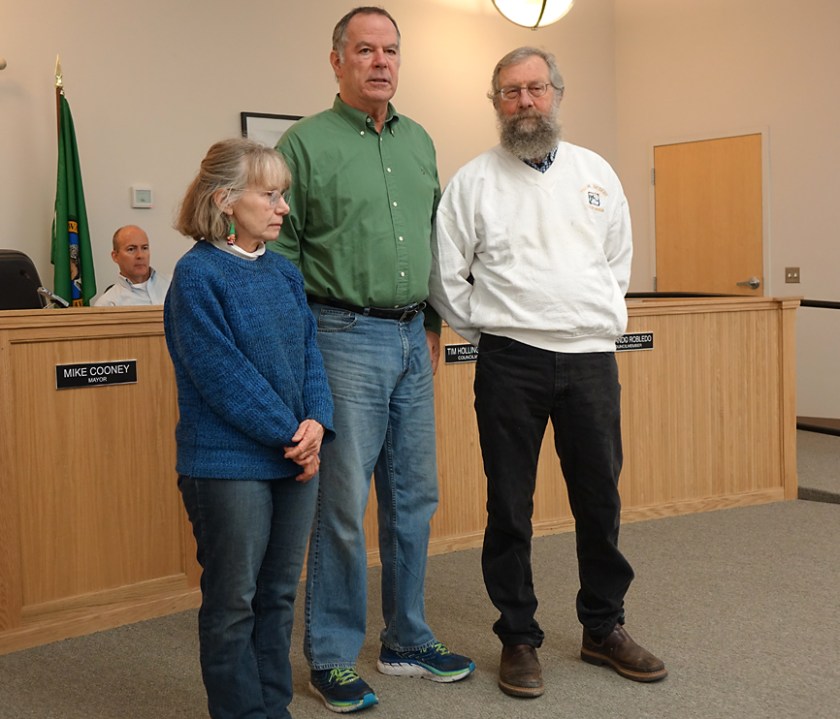
Mayor Cooney recognized Mark Tesch and his wife Michelle Jerome at the final City Council meeting of the year. Mark, who has been a steady volunteer in the City of Chelan for a number of years and his nurse wife are moving the Methow Valley. Mark is well known for his work over the years with Chelan Valley Players, Earth Day, Bach Fest and other organizations. 

The December 18 City Council meeting cleaned up a number of motion considerations to end 2018 business in front of the council. Only a few items generated any concern or conversation amongst the Council members.

The biggest item is also the most controversial item addressed by council this past year and Mayor Cooney moved it up to the front of the agenda because there were a number of developer/builders on hand in the audience.

The 2019 Rate & Fee Resolution which includes all fees charged by the City for services also includes the new GFC charges (General Facilities Charges) and Installation Charges that are required before the issuance of a building permit.

The Council unanimously approved the maximum allowable amount from the 2018 GFC study. Each Equivalent Residential Unit GFC for new water service will be $11,926 and each new sewer service is $5,531. In addition a Reservoir Impact Fee of $1,750 will be charged to all new services within the area formerly known as the Chelan River Isenhart Domestic Water System.

DSC04682

Councilwoman Erin McCardle was not happy with a charge being applied to new homes in Lord Acres that hadn’t been discussed prior to the final Council meeting. “I don’t like things at the 24th hour,” she said.

Councilwoman Erin McCardle brought up another fee being applied to new homes in the Lord Acres area. This is a $1,970 charge that will cover the cost of the new sewer lift station installation there. McCardle was uncomfortable with this charge on the agenda bill. “I don’t like things put on at the last minute,” said McCardle. The Lord Acres Local Facility Charge Area Fee had never been discussed and the City’s consultant, Andy Baker apologized to McCardle and the Council. “I don’t like things at the 24th hour,” replied McCardle.

The City looks to raise approximately $14 million on sewer/water hookup fees with increases on a year to year basis until 2027 when the City anticipates upgrades to the Water Treatment Plant and Sewer Plant.

Mayor Cooney stated that at some time a future council will have to address these issues. “I think the Council is doing the right thing.”

Once approved by the Council, John Walcker, a local developer wishing to build a 36 unit affordable apartment house on 2.5 acres above and east of the football field, said as he left the meeting, “It costs more to hook up sewer and water than it does to buy the property.” Walcker has also noted that Chelan has the highest hookup fees in the State.

DSC04677

Prosecuting Attorney Mike Shea was on hand to answer City Council questions regarding his office and request for an increase in funding.

Prosecuting Attorney Mike Shea was on hand to answer Council questions regarding the new proposed Prosecution Services Agreement. Chelan has contracted with the Prosecutors Office since 2004 and the new proposal is identical to previous versions with the exception of price.

Since 2012, the City has paid $44,100 and the new agreement asks for an increase to $50,000 and for a one year term. Past contracts have been for a two year period.

Shea stated that other Cities that the office contracts with pay $250 per case and that Chelan is the only City with a flat fee agreement. He added that based on a per case basis, Chelan would be paying approximately $70,000.

He suggested that the City pay $50,000 and then $60,000 in the second year raising the two year average to $55,000 to bring the costs to parity with other cities in the County.

“What I propose,” said Shea, “Is to charge $50,000 flat rate billed out four times a year.” The Prosecuting Attorney’s office prosecutes local cases like DUIs, etc. “The City of Leavenworth has reduced their numbers,” said Shea. “Each 911 all is expensive.”

DSC04689

Councilman Ty Witt asked where the money goes that is awarded in court cases.

Councilman Ty Witt asked where the money goes when the prosecutor wins and the guilty has to pay a fine. “Where does that money go,” he asked. Shea replied that a lot of that money goes back to the court for operational expenses. “We don’t get a kick back.”

Mayor Cooney commented that the City has a pretty big jump in Sheriff’s Department costs between 2017 and 2018. “I’d welcome a meeting with the Sheriff and others to discuss how policing is done in our town,” commented Cooney.

Shea replied, “I think that is a good idea. Councilman Tim Hollingsworth said it makes sense to get billed on a per case basis, but is concerned that the Council hasn’t seen representatives from the Sheriff’s Department on a regular basis. “We are responsible of how we are being policed.” He also stated that the City needs a discussion on water safety.

DSC04694

Councilman Tim Hollingsworth remarked that the City needs to be responsible for the policing wihin the City.

Also on the agenda items was a Legal Services Extension with Davis Arnell Law Firm. Davis Arnell has provided legal services with the City since 2004 and asked for a retainer increase from $1,750 to $1,900 per month, and an increase from $180 to $190 per hour. This is the first rate increase requested since 2017.

“They have provided outstanding services,” said City Administrator Mike Jackson. “Not just in litigation, but also avoiding litigation,” he added.

City Attorney Quentin Batjer that if the Council would like to talk about the increase request, he was more than willing to do that. Witt asked if there was a competitive bidding process for the services. Batjer said there could be if that is what the City Council wanted to do.

Mayor Cooney stated that Batjer’s nature is to be conservative and steady without looking for ways to make more money.

The Council unanimously approved another year of services with Davis-Arnell.

A number of other agenda items were also passed including the new 2019 City Budget; the 2019 Airport Budget; a new Rally Alley Concession Agreement; CJs Concession at Don Morse Park; Kahiau Volleyball Sand Court Use Agreement Renewal.

The next City Council meeting is on Tuesday, January 8. The public is encouraged to attend.

Board releases statement on hospital… asks for community input

by Richard Uhlhorn

On Friday, December 21, the Lake Chelan Community Hospital and Clinic released a Press Release naming Interim CEO Steve Patonai as its new permanent CEO. This highly unusual move came after seven months of working with B.E. Smith, a national recruitment firm, to find a new CEO.

After interviewing six candidates over the seven month period, the Board offered the job to Patonai. What is interesting about this move is that when Patonai took the interim job, he specifically stated that he was neither a candidate or interested in becoming a permanent CEO.

I have an interview with Mr. Patonai coming up next week. If there are any concerns or questions you would like asked, let me know and I will ask.

______________________________________________

DSC03420

Hospital Board of Commissioners

Following is a statement to the Community from the Board of Commissioners:

December 20, 2018

Dear Lake Chelan community,

Lake Chelan Community Hospital and Clinics (LCCHC) Board of Commissioners has been working on your behalf on three major activities which will impact health care in our community for many years to come.  These are to:

1)  enhance the health and wellness of residents and visitors,

  2)  improve quality of care to the highest standards, and

  3)  lower health care costs.

We want you to know what we are focused on, and how you can help.

What is the Board doing to prepare for our healthcare future? Our LCCHC Board and key hospital and clinic leaders met for two days in August to develop a Ten Year Vision for LCCHC. This is the most far-reaching strategic plan we have ever developed. It will be updated every year as new information emerges, but we already know enough about the rapidly-changing U.S. health care system to be able to predict numerous local effects.  Many of you are already experiencing these changes. The Board’s Ten Year Vision will safeguard LCCHC’s ability to financially thrive in the years ahead and ensure high-care quality to our community.

LCCHC is now focused on six key areas of Performance Excellence in our Vision: People, Service, Quality & Safety, Growth & Innovation, Finance, and Community.  Excellence in all six of these areas are interrelated and necessary to be successful long-term.  LCCHC employees in all areas are working to achieve measurable results. Progress will be monitored to assure that you have satisfying experiences each and every time you encounter LCCHC.

When will the Board hire a new Chief Executive Officer (CEO)? For the last 7 months, the Board has worked with B.E. Smith, a national recruitment firm, to help identify highly-skilled CEO candidates who would love to work in a small but growing rural community. We have taken the necessary time to make sure that the CEO will be the best match to help LCCHC achieve our vision and become a respected leader in our community. Our standards are high, because community expectations are high. All candidates interviewed were very qualified to fill the CEO position but did not “fit” our overall needs.

DSC02849

LCCHC CEO Steve Patonai

The Board has offered the CEO position to our Interim CEO, Steve Patonai. During his tenure at LCCHC we have directed Steve to make the necessary improvements to move LCCHC thoughtfully and strategically towards our Vision. As the new CEO Steve will continue these improvements. During this time of significant challenges and changes, we especially appreciate LCCHC leaders and employees working cooperatively, together, in pursuit of excellence on all levels of our organization. The Board is very confident and supportive of the direction in which we are headed under the leadership of Steve Patonai.  He is the best fit for our organization to guide us to the level needed for achievement of our goals and Vision.

When will the Board break ground for the new Health Care Facility? Thanks to the community-approved local levy in 2017 and the USDA guaranteed loan in October 2018, funding is now in place. We must now refine and finalize a detailed building plan to be sure that every detail and space will support the health needs of our community (the new Ten Year Vision).  We anticipate breaking ground in the Fall of 2019 with construction being completed in early 2021. The Board’s goal is to provide a facility built within the $44.5 million budget, in the right size and design to support innovation of the highest quality experience for all, long into the future.

What does the Board need from the community in order to succeed?  LCCHC is your local health care organization for emergency and outpatient medical services, primary and wellness care, specialty care, and a long list of health and education services. We need your support as we move forward.  Your vision of community health care needs is very important to the Board.  The merging of the Community Vision with the Board’s Ten Year Vision will provide  quality health care for everyone in the community  now and in the future. Feedback about your health care experiences will help us to continuously improve care. Please let us know how the Lake Chelan Community Hospital and Clinics can best serve you.

For a healthy Chelan Valley,

Board of Commissioners: Mary Signorelli, Phyllis Gleasman, Fred Miller, Jordana LaPorte, Mary Murphy

TO WATER RESCUE OR NOT…

by Richard Uhlhorn

At the Chelan Fire Commission meeting on December 12, an issue concerning the need for and purchase of a 25 foot Defender boat surplused by the U.S. Coast Guard for $5,000 came into question.

The boat in question is sitting in the Fire Department’s parking lot, albeit, it is not paid for yet, but Commission Chair Russ Jones was given approval to spend $5,000 on a boat for Chelan Fire and Rescue by the previous commissioners.

DSC04874 Defender

$5,000 plus two new power plants and this Defender could be fully operational and ready to help with any water emergency on Lake Chelan in any type of weather, but two commissioners are not happy with this potentially life saving addition to Chelan Fire and Rescue.

The boat in question was originally built for Homeland Security purposes and was recently put on the Coast Guard’s surplus list without engines. “This is a boat that can deliver a rescue-swimmer in any kind of weather on this lake,” said Jones.

DSC05128

Chairman Russ Jones has been a major proponent for Chelan Fire and Rescue to have an operational boat on Lake Chelan for its rescue-swimmer program and any other function it could be used for.

It needs two high power outboard engines that would cost the District somewhere between $7,000 and $9,000 and a part of the Coast Guard’s deal is that the purchased make the boat operational and keep it for 18 months. As it sits, this boat, which is decked out with electronics and cabin chairs amongst other amenities, is worth about $30,000 + on the open market.

DSC05129

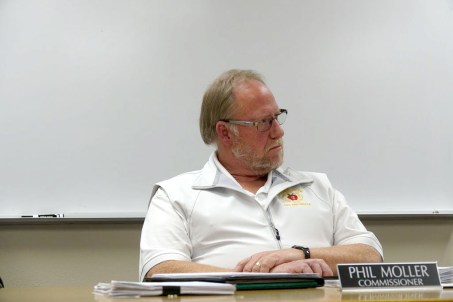
Commissioner Phil Moller is against the District adding a boat to its rescue operation calling it a bucket with a hole in it.

Commissioner Phil Moller called the purchase of a boat for Chelan Fire and Rescue nothing but a money pit. “I don’t know why we are looking for a boat,” said Moller. He also didn’t see any money set aside for a boat and/or the need for it.

Chelan Fire and Rescue has a rescue-swimmer program, but no method to transport them to an emergency scene. “We would have one year to make this boat operational,” said Jones. “As a fully operational craft, the Defender would be worth between $110,000 and $150,000. Our obligation is to make it operational.”

Jones also stated that EMS and District 5 are interested in partnering with Chelan on the boat. “It will cost us some money to get it operational, but it is a pretty decent opportunity.”

Chief Donnell stated that there were a number of issues to consider like its impact on the budget, its operational status and the amount of training to get the pilot up to competency, but also stated that it would be another tool in the tool box

Phil Moller stated that he sees the capabilities but is concerned about the maintenance issues.

Russ Jones said saving even one life on the lake in 10 years would more than pay for the boat.

In addition, the current situation with the Sheriff’s boat is that it takes at least 1.5 hours to become operational and on site of a boat accident, and that the Sheriff’s Department can only use sergeants to operate their boat.

Jones added, “I think it is a no brainer.”

Moller replied that is isn’t in the long range plan and couldn’t support purchasing the boat especially when the District is replacing its ladder truck at a cost of $175,000.

DSC05130

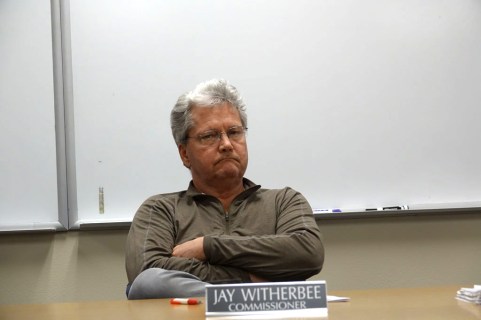
Commissioner Jay Witherbee also doesn’t support the purchase of this boat and said, while he understands Jones’ passion for it, the District can’t be expected to save everybody, every time.

Commissioner Jay Witherbee said he didn’t see a risk of getting the District’s money back and if there was a long range plan, the District could go after grant money. “I understand the passion for it, but we can’t save everybody, every time,” said Witherbee.

Jones asked to table the conversation and decision until the next meeting. Moller continued to state his objection and is concerned about the cost of making the boat operational.

The discussion was tabled until the next meeting.

IN OTHER NEWS:

The District is in the process of purchasing a new (used) Ladder Truck. The current ladder truck has ladder issues that cannot be remedied without actually manufacturing parts.

A ladder truck has been found in Alabama for an asking price of $195,000. “They are willing to accept $175,000,” said John Goyne, the District mechanic. “It has better ladder hydraulics.”

Chief Asher chimed in and said the truck has a 2,000 gpm pump, an ITI ladder, comes with a lot of pullout trays, a basket holder and includes a vertical standpipe with a 2.5 inch discharge. “We can actually pump right through the truck,” said Asher. It also includes an on-board generator. “It’s got a lot of good things and would serve us well,” added Asher.

The selling company will go through the process of certification and the truck also has a one-year warranty. Chief Donnell added that this will be a very good unit for the District.

The District flew both Goyne and Asher to Alabama prior to Christmas to check out the unit. No information has been forthcoming from that visit yet.

Entiat, Orondo and Chelan are getting 97 Scott air bottles under a new grant. These larger bottles offer a safety zone and work off of a high pressure air system.

Mayor Cooney spoke at the Commission meeting about an effort to conduct a fire prevention program for the safety of Chelan. “This would mainly be driven by the Fire Department and City,” said Cooney. “We just need to figure out  the best way to do that.”

Fire Chief Tim Lemon reported that the District has received $584,000 in property tax receipts, $52,000 for a solar grant and $25,000 for a illegal burn fine. “Our expenses are a little higher because of our staff buyout program.” The District has lost several full-time firefighters off the Safer Grant.

DSC05122

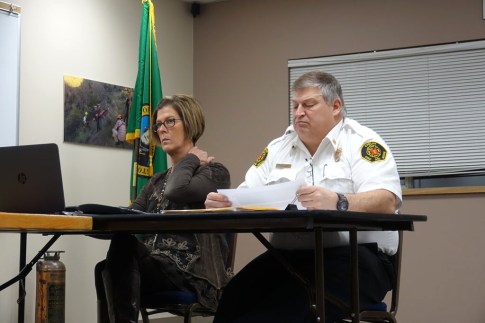
Chief Tim Lemon gave a Chief’s Report.

The State’s L&I rates are expected to be around $16,000 in 2019. “The lower the experience factor, the high the L&I rate,” said Lemon. “It’s up there in the thousands. It ran to $34,000 through October. It is a dramatic change when you get into high risk activities”

Last month the District had for working fires; three within the District and one outside in Orondo. They also responded to 54 calls in November. This is five percent increase over last year.

Chief Donnell reported that it is slowing down for the winter months, but is working on how the District will manage its operation going forward with the loss of Safer grant employees.

He also reported that an in-house EMT class will begin in January.

DSC05126

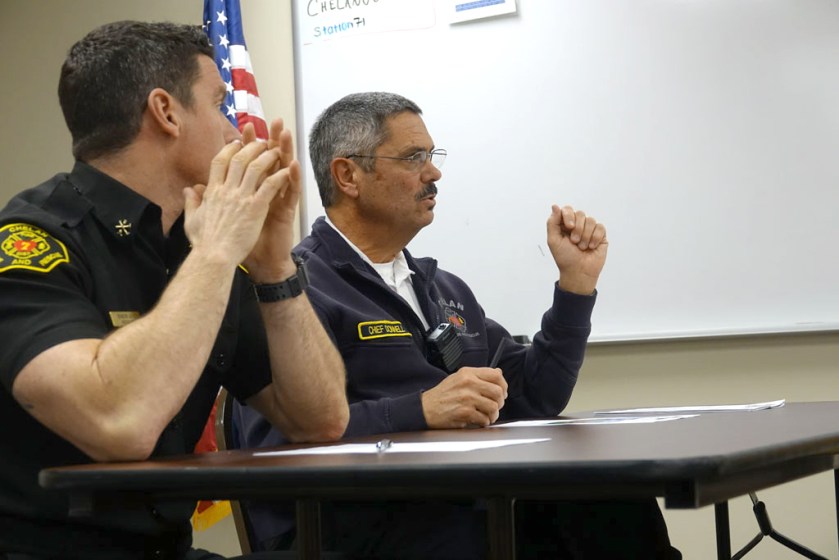
Chief Asher and Donnell (right) both gave reports on the District’s operations.

Chief Asher reported that recruitment has been steady and they are now up to 17 volunteers; nine in-house, six in Entiat and two in Orondo. Asher is paid through a Safer grant to increase volunteers in all three districts. “We lost one long-term volunteer this month.”

The District has two stipend positions open for January with a lot of open spaces in the 24 hour cycle to fill.
Dan Crandall said the Firefighter Association is ending 2018 with $30,653. “We took in less than we spend,” said Crandall. “Most of our expenditures were for victims of fire or accidents plus a department purchase.” The Association purchased emergency airbags at a cost of $8,000 and Crandall reported that they were on hand.
The Association also gave $1,000 to the Food Bank and $1,000 to Chelan Valley Hope.

Crandall also reported that he will be returning as the President of the Association in 2019.

20151007_150156

WATER, WATER EVERYWHERE AND NOT A DROP TO SPARE

by Richard Uhlhorn

In 1925 Chelan Public Utility District received water rights to Lake Chelan for the purposes of using it to generate power. In 1992 a memorandum of understanding agreement was made between the PUD and Department of Ecology for 65,000 acre feet of water for existing and future domestic and irrigation uses.

IMG_1406 -Keep it Blue

All that remains of the 65,000 afy of the Lake Chelan Reserve is 5,243 acre feet. However, 13,144 acre feet have been applied for.

The Lake Chelan Watershed Planning Unit and the Department of Ecology are looking for solutions to fulfill the remaining requests which will include batch processing of water right applications by a state approved contractor at a cost of $5,000 to $15,000 per water right depending on the number of acre feet requested. The costs would be shared by the applicants to keep the costs down with no guarantees of future water availability.

Water right applications, by law, are processed in the order they are received. Water right applications have been sitting in Ecology’s office for a number of years with no funding to process. Enter the Lake Chelan Watershed Planning Unit who have been working diligently with Ecology to come up with a plan to begin processing these applications.

Venessa Brinkhuis, Water Resources Specialist with the Department of Ecology game the Lake Chelan Watershed Planning Unit a detailed presentation on Lake Chelan Water Supply Solutions at the Unit’s meeting on December 12.

Vanessa Brinkhuis, Water Resources Program Contracts and Grant Specialist, at Ecology’s Watershed Planning Unit, presented the newest iterations on the plan which includes restarting the Lake Chelan Coordinated Cost reimbursement Program in 10-application phases 2019.

Ecology and Chelan County will also be rolling out a new pilot, and novel, program to for small domestic uses which will cover the Lake Chelan drainage basin. This program will be called a General Permit Process and will offer a less expensive option for domestic users requiring less than 1 acre foot of water for a domestic connection and 3.5 afy for each irrigated acre. “Everything that drains into the lake would fall under this program,” said Brinkhuis. “Domestic uses are pretty small,” she added.

The County and Ecology also recognize that there are a number of illegal users pumping water out of the lake without a permit. “They will be required to obtain a permit,” said Brinkhuis. “It’s a pretty unique program and a great place to pilot this and move forward.”

DSC05115

Mike Kaputa, Chelan County Water Resources Director remarked how difficult water rights issues are in the Lake Chelan Basin.

Mike Kaputa added that the agencies are trying to figure out the details of a General Permit Process.

Ecology and County will also be looking at several other options to add to the 5,243 acre feet per year remaining on reserve. This could come through repurposing or purchasing existing water rights not being used.

The average daily water use as calculated by the City of Chelan is 335 gallons per day. Bear Mountain Water District has a combined domestic and irrigation use of 433 gallons per day and Manson is similar to Chelan.

The current water duty for Irrigation includes 3.33 afy for lawns; 1.90 afy for grapes; 2.91 to 3.15 afy for tree fruit. Lake Chelan Reclamation District manager Rod Anderson remarked that the district pumped 80 percent of their water right this year. “That is pretty similar to last year,” he said.

Kaputa remarked that these are tools with some potential but, “We need to recognize how difficult these issues are.”

LAKE CHELAN WATER QUALITY MONITORING PROGRAM

DSC05111

Steve Nelson, RH2 Engineering, gave an overview of the ongoing Lake Chelan Water Quality Monitoring Program.

Steve Nelson, RH2 Engineering, recapped the last two years of water quality monitoring in Lake Chelan. “We have focused on the Wapato Basin,” said Nelson. They have done some monitoring in the southern part of the Lucerne Basin also.

“We have been looking at a profile at 1 meter, 10 meters and 20 meters down in the water column,” Nelson stated. The program is being conducted by the Lake Chelan Research Institute on a monthly basis. The monitoring sites are in the lower, middle and upper regions of Wapato Basin. Monitoring is taking place between May and September.

LCRI is also taking samples out of the Stehekin River and Railroad Creek in the upper basin. Both are the major drainages flowing into the lake. They are also monitoring water at the Chelan Dam.

DSC05112

Phil Long (PhD) updated the group on Secchi Disk measurements that have been taken over the years. 

The monitoring also includes Secchi Disk visibility. Phil Long, director of the LCRI, stated that visibility has been monitored in the spring, summer and fall. He explained that visibility is less in the spring when glacial sediment flows into the lake. It is also affected by plankton blooms and becomes better as the year goes on.

The monitoring is an important aspect to keeping an eye on the ecological health of the lake.

RECENT POSTS

Affordable housing debated at workshop

by Richard Uhlhorn

Affordable Housing in the Lake Chelan Valley has been at a crisis stage for several years. There is no affordable housing available and the situation continues to worsen as prices for what comes available continues to rise.

The problem of affordable housing is multi-faceted. Most full time residents are making anywhere from $15 per hour down to minimum wage. Chelan Valley Trust says the average income in Chelan is $37,000 a year or $17.78 per hour. Let’s say that $37,000 is an average. You still can’t afford to purchase a home when the average purchase price of a home is $400,000.

Chelan Valley Trust has a plan to develop affordable homes. The organization has a $2 million construction loan from North Cascades Bank and proposed bids to construct homes in the $170,000 to $200,000 range. Land has already been donated by the Lookout and the Trust would own that land. The new homeowner would own the home.

The City’s proposed budget has $100,000 set aside to help with Affordable Housing efforts. The idea is that these funds could be used to help pay for general service charges to make the construction less expensive.

The other facet to the affordable housing dilemma is that many of the people working in the service industry are young and not ready to purchase a home. This is an argument being made by John Olson on a regular basis. Olson also has pushed the City to recognize that short term rentals has taken much of the long term rental out of the market as home owners try to capitalize on Chelan’s busy tourism season.

The City and the new Chelan Valley Trust should be applauded for attacking the affordability of living in the Valley, but unfortunately, it will be at least a year before the first affordable houses are being built. Until that time, people seeking homes or apartments will have a difficult time putting a roof over their head in the Lake Chelan Valley.

While the City Workshop on Tuesday, December fourth was dedicated to the proposed budget and GFCs (General Facilities Charges), affordable housing became a major topic of discussion.

DSC04483

Councilwoman Erin McCardle wants the City to have solid plan on hand when it begins to use funds set aside to help develop affordable housing.

Erin McCardle opened the workshop budget hearing with a question. “Why isn’t affordable housing on the agenda? . We haven’t had a discussion yet. The 2019 proposed budget has set aside $120,000 for affordable housing issues and McCardle is concerned that this funding measure is done right.

Mayor Cooney pulled the issue out and said, “Let’s discuss it.” Tim Hollingsworth, who is on the board of directors of Chelan Valley Trust, commented that it was prudent to have it in the budget if the organization wants to build affordable housing. “Obviously we don’t’ want to open our check books.”

DSC04486

Councilman Tim Hollingsworth agreed that the City needs to be a partner with the newly formed Chelan Valley Trust.

McCardle replied that the City wasn’t ready to do that because it needs to have a policy in place whereas Hollingsworth replied that the city has a comprehensive plan and that a part of that plan is to provide a subsidy for housing. McCardle reiterated that the City needs to have a policy in place. “I’m comfortable putting money aside, but not comfortable until a plan is in place. There is no oversight.”

DSC03457

Mayor Cooney agreed that McCardle’s request for solid criteria and oversight of the City’s funds for affordable housing was a fair concern.

Mayor Cooney replied that Erin’s concern was fair and that the City needs to go back to Andy to make sure the City can use money set aside to help with GFCs (General Facility Charges) for affordable housing. The proposed plan is to have set aside money to help pay for the required City GFC charges. In essence, the City would allow a subsidy $3,000 to $4,000 dollars per affordable home to be used against the GFC charges. Hollingsworth said, “We are trying to create an organization that can partner with the City.” McCardle replied to Hollingsworth. “We haven’t done our job to finish it.” Cooney said, “We will finish it.”

City Administrator Mike Jackson stated that the City has to be careful. “We need restrictions with ground rules,” he said. “It’s important to enforce this.” McCardle replied that she doesn’t want to see those funds restricted to just the Housing Trust.

Andy Baker (FCS) said, “I think we can define this by ordinance. You have to have an ordinance with requirements and income levels.” Mayor Cooney added that he, Mike Jackson and Baker would sit down and get the language down for the ordinance.

Hollingsworth also stated that the City needs permanent affordable rentals… not market rate rentals. Ray Dobbs added, “I don’t want to see Habitat for Humanity out of the affordable housing market.”

Cooney added that the City wasn’t just looking at single family housing. “I’m not ruling out multi-family housing… just focusing on single family housing.”

DSC04490

Guy Evans encouraged the City to look into reducing GFCs for large projects.

Guy Evans and a financial advisor from the Weidner Group gave a presentation to the City Council and staff concerning Weidner’s desire to build a 240 unit apartment complex on Apple Blossom Center property. Evans, a realtor with Coldwell Banker, said, “We have a lot of challenges in Eastern Washington… too many unknowns.” Evans went on to say that local developers did not have the funds or the desire to build multi-family housing.

DSC04491

Weidner Group is a for profit company that builds apartment complexes across the Nation with rents at market rates. If they were to build at the Apple Blossom Center, the rents would look similar to the above graph.

“The beauty of Weidner is that they have a strong balance sheet and are willing to make that bet,” said Evans. Of course the cost of the City’s GFCs is an issue and Evans encouraged the City to look closely at cutting those fees to a reasonable amount.

Councilman Ray Dobbs commented that the City of Leavenworth is waiving a lot of those fees to get affordable housing built in that community. Councilwoman Wendy Isenhart remarked that Chelan needs housing in all categories for the middle income resident.

Councilman Ty Witt asked if the Weidner project was big enough to offset the City’s vacancy rates.

Mayor Cooney added, “I think everybody gets it. I like the location for it. A bunch of apartment homes don’t turn me on, but a large complex might work.” Evans encourage the City to get a conversation started.

Napa_Business_Card (1)


City unanimously lowers GFC charges until new charges are adopted for 2019

RECENT POSTS

by Richard Uhlhorn

The City Council unanimously lowered the City’s GFC Charges until it is able to adopt the 2019 GFC Rate Resolution. The intent of this temporary resolution is to provide water and sewer GFC’s at a 1 ERU rate for properties requiring ¾ inche or smaller meter size.

The lower rates will result in refunds anticipated to be approximately $70,000, impacting 15 to 20 properties, and the average reduced charges (including those not paid) to be approximately $11,000 per property. The Council unanimously passed this temporary Rate Resolution.

The new Water and Sewer GFC charges, when passed by the Council will recognize ¾ inch as a standard size meter under the Uniform Plumbing Code.

DSC03452

Andy Baker, (FCS) is the City’s consultant working on a proposal for new GFC charges for water and sewer hookups.

At its November 27 meeting, Andy Baker (FCS), the City’s consultant working on GFCs, gave a presentation of his company’s research. The meeting had a number developers and builders on hand to hear his presentation and the Council’s reaction.

Baker told the Council that any reduction in GFCs will have to come from another source. Mayor Cooney suggested that those costs could be passed on to commercial businesses.

Erin McCardle said that the proposed GFCs lacked clarity and Kelly Allen remarked that the GFCs stick it to businesses. Ray Dobbs stated that the general assumption was that residences being build were mostly three bedroom homes.

Baker replied that the number of ERU’s being attached to each home is based on how much water and pressure is required to serve that home, and how far way the home is from the water main indicating that ¾ inch meters were now a required standard to meet the pressure requirements.

Homes currently with 5/8’s meters will have to be changed over to ¾ inch meters which means the home owner’s monthly rate will be higher to compensate for the replacement cost of the meter.

Tim Hollingsworth said he wasn’t convinced of the equitability of property owners having to continue to pay for services even though the building was torn down.

Baker replied that even though the building was no longer there the property owner continues to pay for the system, but wouldn’t pay for water use.

“Council might want to debate the fairness of that,” said Hollingsworth.

Guy Evans, a real estate broker commented that the current GFC charges were $16,000 for a downlake home (it is more uplake). John Walcker, a local developer asked Baker if he had compared rates with other communities.

“We did compare costs,” said Baker. “Each municipalities fees are based on their policies and each community’s cost.”

Walcker pointed out that the City of Manson only charges $11,500 and that Chelan’s GFC charges were currently 12 percent of the total cost of building. “It’s insane,” he quipped. Walcker is hoping to build a 36 unit affordable apartment building and said it would cost him $700,000 in charges.

Mayor Cooney said, “None of this is profit motivated… it’s to keep the system up and running.”

The Council, staff and consultant will meet on Tuesday, December 4 at 4 p.m. to continue to discussing the proposed GFC charges for 2019. The proposed budget will also be a topic of discussion in preparation of adoption at it’s December 18 Council meeting.

City holds public hearing $16 million dollar budget

RECENT POSTS

by Richard Uhlhorn

In one of the longest City Council meetings in recent history, the Council held two public hearings, listened to three administrative reports and voted on four motion considerations. The meeting began at 6 p.m. and didn’t end until nearly 10 p.m. Tuesday night, November 27.

DSC03430

Finance Director Steve Thornton gave a 2019 budget briefing to the City Council at its Tuesday, November 27 Council meeting and told the Council that if anything in the proposed budget was giving them heartburn to speak up.

A Public Hearing was held on the 2019 Proposed Budget to provide an opportunity for public input. The budget briefing was delivered by new Finance Director Steve Thornton who began is briefing by telling the Council, “If there is something giving you heartburn, let’s hear it!”

The City has arrived at the preliminary 2019 budget after six workshops. The $15,778,885 budget covers the following proposed expenditure and revenue sources; the General Fund – $4,881,965, Parks and Recreation – $2,880594, Street Fund – $1,229,584, Sewer – $1,985128, Water – $2,057,452, Sanitation Services -$1,489,668, and Equipment and Replacement – $1,254500.

Significant change to this budget includes an additional $120,00 to the Affordable Housing Initiative and $45,072 in increased costs for the Sheriff’s Department and Prosecuting Attorney.

Revenue sources include an additional $273,000 in Sales Taxes which is based on a three year average of plus 3 percent. An additional $44,240 in Property Taxes based on the Council’s passage of a 1% Property Tax increase and annexation plus growth. Utility taxes will add another $31,500 and the Building and Planning Department will add another $42,750 based on a three year average.

The City expects to receive +/- $378,420 in 2% Stadium Fund money and $567,630 in 3% Lodging Taxes in 2019.

The 2% funds will be used to advertise the Golf Course ($10,000), cover $138,066 in debt service, Recreational Capital Expenditures of $201,000 (incudes two new volleyball courts and pump track), and $70,000 for Maintenance at the Parks.

The 3% funds are budgeted at $567,630 for marketing Chelan and $54,000 for bathrooms at the parks.

Increases in Parks and Recreation revenues are expected to reach an additional $111,750 in 2019. Increases will come from parking, the RV Park and Golf Course.DSC03435

Erin McCardle is not happy with the Chelan Municipal Golf Course losses last year and asked about the 2 percent Stadium Funds being used to advertise the facility.

Erin McCardle asked about the money from 2% funds being paid to advertise the Golf Course and why it wasn’t listed as a golf course expenditure. Ty Witt asked if 2% money was being used for anything else other than the Golf Course. Cheryl Grant (former City Finance Director) replied that there were no more requests for 2% funding.

DSC04419

Ty Witt asked if anyone else in the Parks and Recreation Department requested 2 percent monies. 

DSC00623

Tim Hollingsworth asked if it was right to advertise with 2 percent funds.

Tim Hollingsworth asked if it was right to advertise with these funds. Grant replied that the intention was to get people over to Chelan to golf. Ray Dobbs called the plan a great marketing tool. Mayor Cooney told McCardle that the item would be moved to reflect it was for golf course use.

DSC03431

Kelly Allen said she would like to see a plan for maintaining City Streets.

The rest of the proposed budget covered standard city services. Kelly Allen remarked that she would like to see a plan for replacing or maintaining City Streets. Mayor Cooney replied that there is a six-year plan in place that details the streets to be resurfaced or maintains. City Administrator Mike Jackson also stated that there has been discussions about a street restoration plan. “The big thing is that we don’t lose our road beds,” said Jackson. “That’s when it gets expensive. Our roads are in pretty good shape.”

DSC03443

City Administrator Mike Jackson told the Council that the City streets are in good shape but said there have been discussions with the Public Works Department about a restoration plan.

The Council will be adopting the budget at its December 27 Council meeting.

The first public hearing on Tuesday concerned a Development Standard revision for use of private roads for Agricultural Tourism .

DSC03422

Planning Director Craig Gildroy presented a revision to the City’s development standards to include private road use for ag-tourism.

The revision of the Development Standards came about because of a request by Blue Water Terrace which is becoming a working farm above Legacy Ridge on the north side of Lake Chelan. The revision requires that the road be built to the City’s Public Road Standards, but would remain private and maintained by the property owner. “We are not taking responsibility of that road,” asked Councilwoman Kelly Allen? Planning Director Craig Gildroy replied that it would be the owner’s responsibility to maintain the road.

There were no public comments and the Council unanimously approved the revisions and instructed the City Attorney to prepare the adopting ordinance.